











Translating a National Observance Into a Concrete Next Step for Tennessee Adults With Treatment-Resistant Conditions
Every May, millions of Americans pause for Mental Health Awareness Month — a national observance that has run for more than seventy-five years, and that asks something simple of all of us. Pay attention. Speak honestly. Make space for treatment.
For someone living with depression, severe anxiety, complex trauma, or a serious mental illness, the month can feel like the rest of the country finally walks alongside them for thirty-one days. The harder question is what comes next on June 1, when the green ribbons come down, and the social posts stop, and the symptoms are still there.
At Arbor Wellness in Brentwood, Tennessee, we work with adults whose conditions need more than awareness can deliver — adults whose depression has not lifted after multiple medication trials, whose complex post-traumatic stress sits underneath the most stubborn anxiety, or whose mood instability has cycled through years of inconsistent treatment. Mental Health Awareness Month is the starting line. Real recovery happens on the days that follow.
The History of Mental Health Awareness Month
Mental Health Awareness Month was established in 1949 by Mental Health America, then known as the National Association for Mental Health. The organization was founded by Clifford Beers, a former psychiatric patient whose 1908 memoir A Mind That Found Itself exposed the abuses of early twentieth-century asylums and helped launch the modern mental health movement.
For more than seventy-five years, May has served as the country’s annual platform for mental health education, advocacy, and screening. Mental Health America has anchored the observance with toolkits, free online screening tools, and theme campaigns that shift each year.
The National Alliance on Mental Illness, or NAMI, formally observes May as well and runs parallel campaigns focused on lived experience, family support, and stigma reduction. In recent years, federal agencies, public schools, employers, and faith communities have joined the observance — Nashville, Franklin, and Brentwood routinely light landmarks green, the international color of mental health awareness.
Learn More: Spring Reset – How Seasonal Changes Impact Mental Health
The State of Mental Health in 2026
The need for the observance has not diminished. According to the National Institute of Mental Health, roughly one in five American adults lives with a mental illness in any given year, and roughly one in twenty lives with a serious mental illness that substantially interferes with one or more major life activities.
The treatment gap remains the central problem. Fewer than half of adults with a diagnosable mental illness receive treatment in a given year, and the gap is even wider for young adults and for people living with co-occurring substance use disorders.
What the Tennessee Picture Looks Like
Tennessee is not exempt. State data reported by the Tennessee Department of Mental Health and Substance Abuse Services consistently shows that demand for behavioral health services in the Nashville metro and across Williamson County exceeds local capacity, particularly at the residential level.
That gap is part of why Arbor Wellness exists. Local outpatient providers and the regional hospital systems do good work for adults whose conditions respond to standard interventions, but residential capacity for adults with treatment-resistant or complex presentations is in short supply across Middle Tennessee.
Practical Ways to Take Part in Mental Health Awareness Month
The month does not belong only to clinicians and advocacy organizations. There are concrete actions that individuals, families, and employers can take, each of which moves the needle in a measurable way.
- Take a free online screening: Mental Health America offers anonymous screenings for depression, anxiety, bipolar disorder, PTSD, and several other conditions. The screening is not a diagnosis, but it is a structured starting point and a useful conversation opener with a primary care doctor.
- Save the 988 Suicide and Crisis Lifeline: Add 988 to your phone contacts and the contacts of your teenagers and aging parents. The line is free, confidential, and available around the clock to anyone in mental health distress.
- Share one lived-experience story: Stigma weakens when ordinary people speak. You do not need to publish a memoir — a short, honest sentence in a family text thread or a team meeting can change what is possible for someone listening.
- Audit your workplace benefits: Ask your HR team what behavioral health benefits and Employee Assistance Program sessions are actually available. Many workers never use the benefits they already have because nobody explained them clearly.
- Check on someone who has gone quiet: If a friend, neighbor, or coworker has pulled back from texts, gatherings, or work output, send the message anyway. A specific, low-pressure check-in is one of the most evidence-based practices in informal mental health care.
Learn More: Mental Health Reset in 2026 With a Focus on Healing
When the Awareness Reveals a Need for More
For some readers, Mental Health Awareness Month brings to light a recognition that has been quietly building for months. The symptoms are not new. The outpatient appointments and medication trials are not new. What is new is the willingness to name what is happening clearly and to ask whether more is needed.
Residential treatment is not the right answer for every situation, but it is the right answer when one or more of these is true:
- Two or more antidepressant or mood-stabilizer trials have not produced sustained relief.
- Suicidal ideation has been present for more than a few weeks, particularly if it is becoming more specific.
- Daily functioning — work, parenting, friendships, basic self-care — is breaking down at once.
- The home environment has become part of the problem rather than a source of support.
- A brief inpatient hold did not produce lasting change.
How Arbor Wellness Approaches Treatment-Resistant Mental Health Conditions
Arbor Wellness is a thirty-eight-bed residential mental health treatment center in Brentwood, Tennessee, in Williamson County, just south of Nashville. We treat adults whose conditions have not responded to standard outpatient care.
Conditions We Specialize In
The diagnoses that bring most adults to our doors are complex PTSD, treatment-resistant depression, severe anxiety, bipolar disorder, and serious co-occurring conditions. Each admission is built around a comprehensive diagnostic workup rather than slotted into a generic program track.
Advanced Therapeutic Modalities
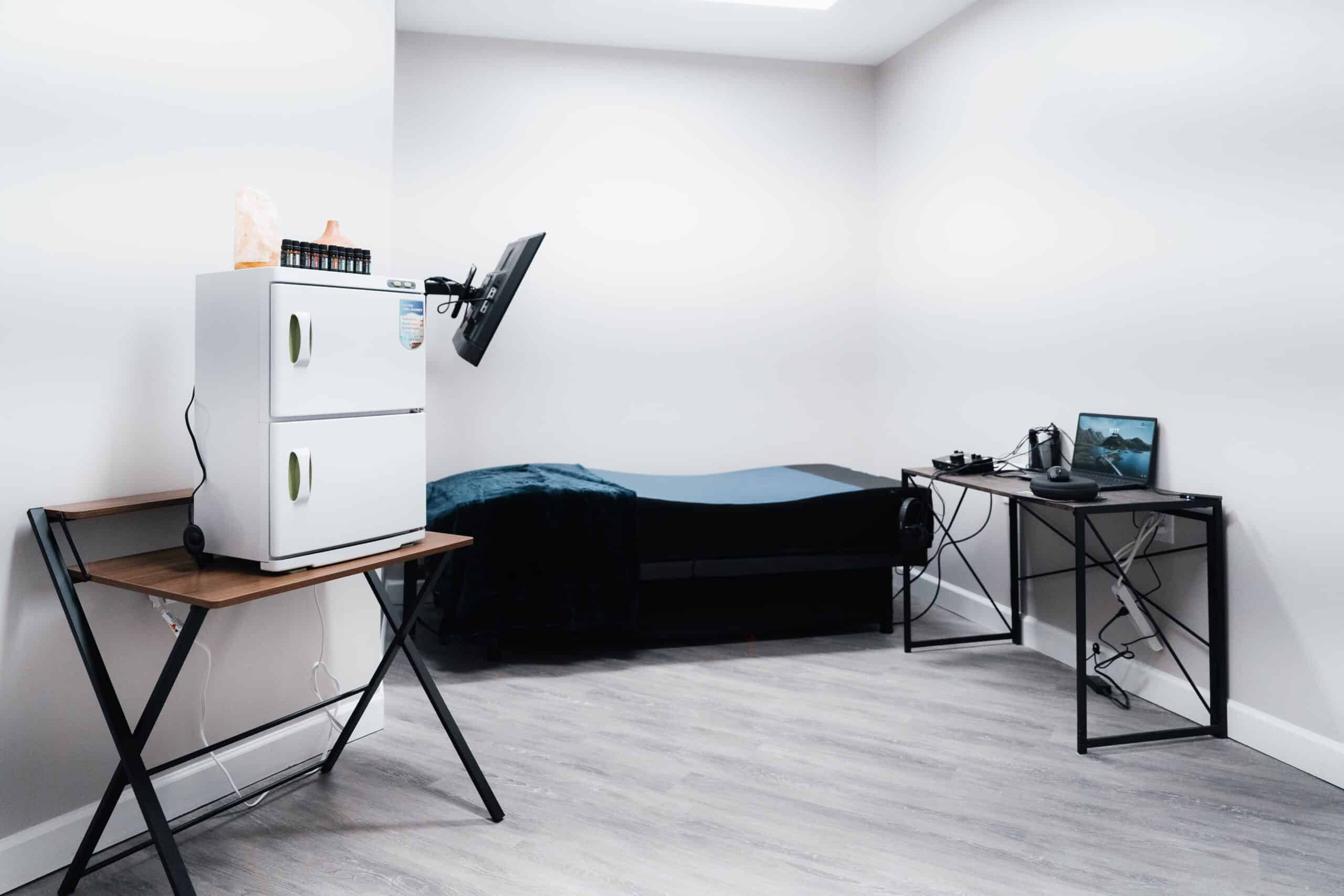
Beyond cognitive behavioral therapy, dialectical behavior therapy, and trauma-informed individual therapy, our daily clinical model integrates Alpha-Stim cranial electrotherapy stimulation, Biosound therapy, somatic therapy, music therapy, art therapy, red light therapy, and trauma-informed yoga. The amenities on our campus — a private chef, a spa with cold plunge and sauna, a sensory room — are integrated as clinical tools for nervous system regulation rather than as decorative perks.
Continuing Care and Alumni Support
Our work does not end on discharge day. The Arbor alumni program stays connected with graduates through group calls, check-ins, and the option to step into outpatient care closer to home with continuity of clinical understanding.
Turn Awareness Into a Confidential Conversation
Mental Health Awareness Month is a starting line. The stories shared in May are meant to lower the cost of asking for help in June, July, and every month after.
If the awareness is surfacing something specific in your life — your own struggle, or the recognition that someone you love is no longer okay — the next step is not as large as it feels. Reach out to our admissions team for a free, confidential conversation about whether residential treatment fits the situation in front of you.
We will listen, tell you the truth about what your insurance covers, and help you map out the next step honestly. When you are ready, we are here.
Frequently Asked Questions About Mental Health Awareness Month
When is Mental Health Awareness Month, and who started it?
Mental Health Awareness Month is observed every May in the United States. It was established in 1949 by Mental Health America, founded by Clifford Beers, a former psychiatric patient whose 1908 memoir helped launch the modern mental health movement. The month is now also observed by NAMI, federal agencies, employers, schools, and local communities across all fifty states.
How do I know if my symptoms warrant more than outpatient therapy?
The clearest signs are persistent suicidal ideation, multiple failed medication trials, breakdown in daily functioning across work and relationships, and recognition that the home environment has become part of the problem. A confidential conversation with a residential admissions team can help clarify whether residential treatment fits your specific clinical picture before any commitment is made.
What is the difference between mental health awareness and mental health treatment?
Awareness reduces stigma, increases knowledge, and helps people recognize symptoms. Treatment is the active clinical care that addresses those symptoms— such as therapy, medication, residential care, intensive outpatient programming, or a combination. Awareness without access to treatment is incomplete, which is why Mental Health Awareness Month always pairs education with calls to action, screening tools, and crisis resources like 988.
Sources
- Mental Health America. (2026). Mental Health Awareness Month. Retrieved from: https://mhanational.org/mental-health-month/. Accessed on May 15, 2026.
- National Alliance on Mental Illness. (2024). Mental health by the numbers. Retrieved from: https://www.nami.org/mental-health-by-the-numbers/. Accessed on May 15, 2026.
- National Institute of Mental Health. (2024). Mental illness statistics. Retrieved from: https://www.nimh.nih.gov/health/statistics/mental-illness. Accessed on May 15, 2026.
- 988 Suicide and Crisis Lifeline. (2024). 988 Suicide and Crisis Lifeline. Retrieved from: https://988lifeline.org/. Accessed on May 15, 2026.


