












Moving from Chronic Overload to Sustainable Stability in Music City
April is National Stress Awareness Month, a timely reminder for all of us to pause and evaluate the toll that modern life is taking on our mental and physical health. In a high-growth, high-pressure city like Nashville, stress is often normalized as a necessary byproduct of success. We wear our “hustle” as a badge of honor, often ignoring the rising cortisol levels, the fragmented sleep, and the persistent anxiety that accompany a life of chronic overload. But as the medical team at Arbor Wellness in Brentwood can attest, there is a massive clinical difference between “being busy” and living in a state of chronic toxic stress.
Chronic stress is more than just a feeling; it is a profound physiological state that can lead to major depressive episodes, generalized anxiety disorders, and physical illness. If left unmanaged, it can even trigger the onset of severe psychiatric conditions in those with a genetic predisposition. To celebrate Stress Awareness Month 2026, we have compiled five evidence-based, clinically validated strategies to reduce stress and protect your mental health.
While these tools are essential for daily life, we also recognize that when stress has evolved into a clinical crisis, professional residential treatment may be the only way to break the cycle. Here is how to navigate the pressure of Middle Tennessee with resilience.
Addressing the Stress of the “It” City: The Nashville Context
Nashville’s rapid growth has brought incredible opportunity, but it has also brought a “pressure cooker” environment. Whether you are a healthcare worker managing the high stakes at Vanderbilt, a creative navigating the rejection of Music Row, or a professional commuting from Franklin on a gridlocked I-65, the noise of the city can keep you in a chronic state of “fight or flight.”
Our Brentwood sanctuary is designed specifically to counter this Nashville hustle. We provide a “pause button” for residents of Davidson and Williamson counties, allowing you to step out of the grind and into a place of deep, structured peace.
1. Master the Art of Micro-Mindfulness
One of the biggest misconceptions about stress management is that you need to spend an hour a day in a silent room to see results. Science shows that “micro-mindfulness”—brief, intentional moments of presence throughout the day—is actually more effective for regulating the nervous system over time because it prevents the accumulation of stress.
- The Evidence: Brief mindfulness exercises lower blood pressure and reduce activity in the amygdala, the brain’s fear center.
- The Nashville Application: When you are stuck in traffic on the Connector or the I-440 loop, instead of ruminating on your late arrival, practice “square breathing” (inhale for 4, hold for 4, exhale for 4, hold for 4). This sends a biological signal of safety to your brain, preventing a cortisol spike before you even reach your destination.
2. Prioritize Circadian Alignment
Stress and sleep are a bidirectional loop: stress ruins sleep, and poor sleep makes you significantly less resilient to stress. As the sun stays out longer in April, it is vital to protect your body’s internal clock to manage your mood.
- The Evidence: Disrupted sleep architecture is a primary risk factor for Major Depressive Disorder.
- The Practical Tool: Limit blue light (from phones and TVs) for at least 60 minutes before bed. Use morning sunlight to signal to your brain that the day has begun. At Arbor Wellness, we enforce strict sleep/wake cycles because we know that “Routine is Medicine” for a stressed brain.
3. Utilize Somatic Regulation (The Body-Brain Connection)
You cannot always “think” your way out of a stressful state, but you can physically force your body to relax. Somatic regulation techniques target the vagus nerve to pull you out of “fight or flight” and into “rest and digest.”
- The Evidence: Somatic experiencing is highly effective for reducing the physical symptoms of anxiety and PTSD.
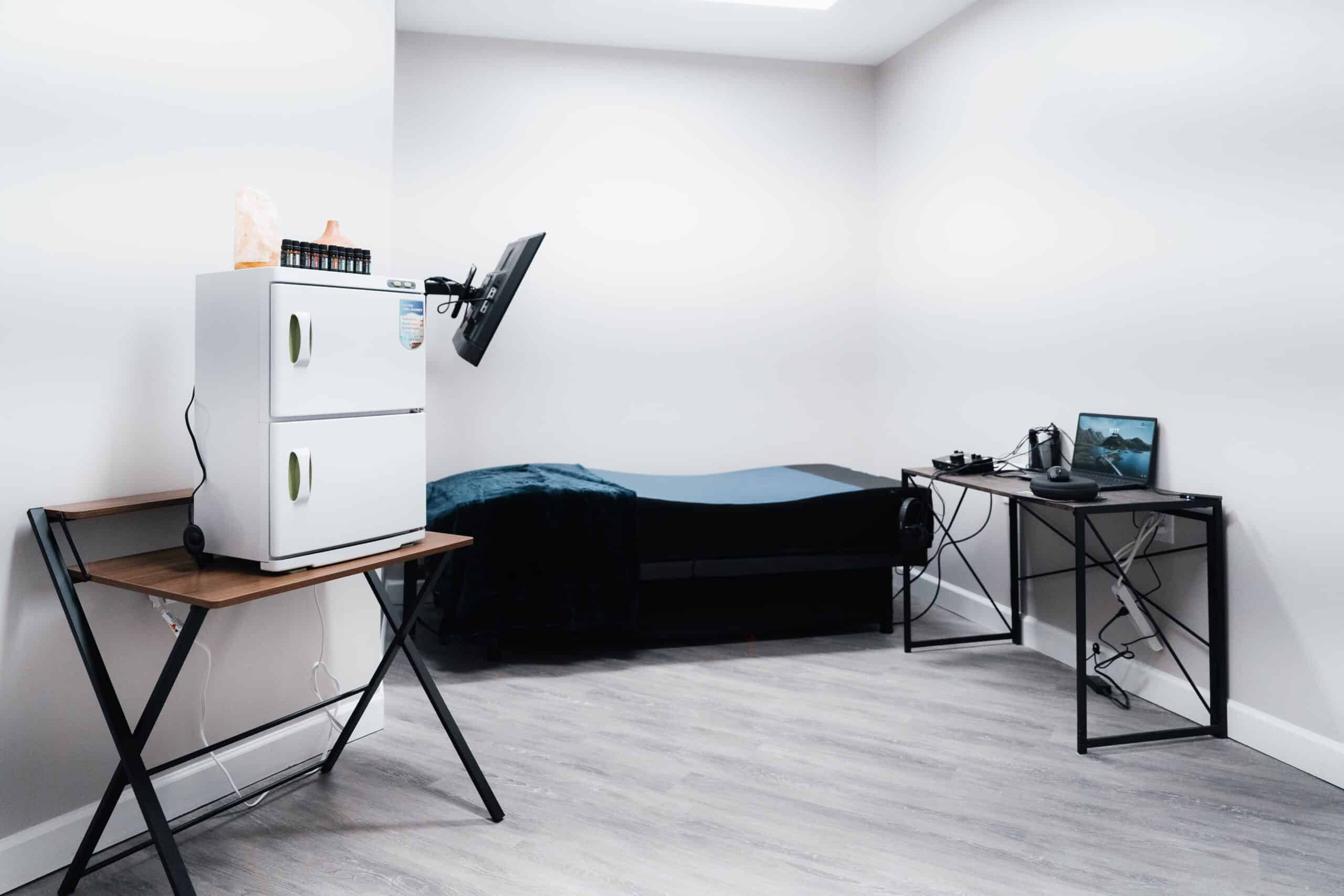
- The Practical Tool: At home, try a quick cold-water rinse on your face or wrists to trigger the “dive reflex,” which instantly slows heart rate. In our facility, we take this to the clinical level with our spa, featuring a cold plunge and sauna, and use contrast therapy to build unshakeable distress tolerance. We also utilize Biosound Therapy to assist in this physical reset.
4. Precision Nutrition for Brain Health
What you eat dictates the raw materials your brain has to manufacture “happy” neurotransmitters like serotonin and dopamine. High-sugar, processed diets fuel neuroinflammation, which is a known driver of chronic stress and depression. Myriad studies show that dietary quality impacts mental health outcomes.
- The Evidence: The gut-brain axis is responsible for up to 90% of serotonin production.
- The Practical Tool: Focus on Omega-3 fatty acids and magnesium-rich foods (leafy greens, nuts). Our Private Chef at Arbor Wellness prepares meals specifically designed to repair the gut and lower systemic inflammation, proving that the kitchen is a vital part of the psychiatric clinic.
5. Digital Detox and Boundary Setting
In 2026, our greatest source of chronic stress is often the device in our pockets. The constant barrage of notifications, work emails, and social comparison keeps the brain in a state of high-beta electrical activity, which is synonymous with anxiety.
- The Evidence: Excessive screen time is correlated with increased rates of anxiety, social isolation, and sleep disruption.
- The Practical Tool: Set “Do Not Disturb” hours and strictly enforce them. Reclaim your attention. At Arbor Wellness, we use a structured technology policy to help our residents disconnect from digital noise and reconnect with their authentic selves.
When “Management” Isn’t Enough
If you have tried to manage your stress on your own but still find yourself falling into cycles of depression, panic, or substance use, it is a sign that your nervous system is in a state of “overload” that requires professional intervention. Chronic stress can be just as debilitating as any other medical condition, and there is no shame in needing a clinical reset.
Arbor Wellness offers the expert psychiatric care and luxurious Brentwood environment you need to truly heal. We are in-network with Aetna, Blue Cross Blue Shield, Tricare and United Healthcare to make care accessible.
Contact our admissions team today for a confidential assessment. Let’s make this Stress Awareness Month the moment you finally prioritize your peace and long-term health.
Frequently Asked Questions About Stress Awareness Month
How do I know if my stress is “normal” or a clinical anxiety disorder?
Normal stress usually has a clear, temporary cause (like a work deadline) and subsides once the stressor is gone. A clinical disorder (like Generalized Anxiety Disorder) involves persistent, uncontrollable worry that interferes with your daily life—your sleep, work, and relationships—even when there isn’t an immediate crisis.
Does the “pattern interrupt” of residential treatment really work for chronic stress?
Yes, absolutely. By physically removing yourself from the environment and triggers of your daily life, you give your amygdala (the brain’s fear center) the chance to “stand down.” This creates the mental space necessary for the deep therapeutic work and somatic regulation that outpatient therapy often can’t achieve in a one-hour session.
Is Stress Awareness Month just for people with a psychiatric diagnosis?
No. Stress Awareness Month is a public health initiative for everyone. However, it serves as a critical entry point for those whose stress has become unmanageable, encouraging them to seek the professional help they deserve before it evolves into a more severe psychiatric crisis.
Sources
- American Psychological Association. (2023). Stress in America: A National Crisis. Retrieved from: https://www.apa.org/topics/stress. Accessed on April 23, 2026.
- National Institute on Drug Abuse. (2024). Stress and Substance Abuse. Retrieved from: https://nida.nih.gov/. Accessed on April 23, 2026.
- National Institute of Mental Health. (2024). I’m So Stressed: Fact Sheet. Retrieved from: https://www.nimh.nih.gov/health/publications/so-stressed-out-fact-sheet. Accessed on April 23, 2026.
- Harvard Health Publishing. (2024). Understanding the Stress Response: Chronic Activation of This Survival Mehcanism Impairs Health. Retrieved from: https://www.health.harvard.edu/healthy-aging-and-longevity/understanding-the-stress-response. Accessed on April 23, 2026.
- Firth, J., et al. (2019). The effects of dietary improvement on symptoms of depression and anxiety: A meta-analysis. Psychosomatic Medicine. Retrieved from: https://pubmed.ncbi.nlm.nih.gov/30720698/. Accessed on April 23, 2026.


