







Inpatient Mental Health Care for Alabama Residents
Specialized, live-in mental health treatment for adults, about two hours north of Huntsville. Honest about the drive, and honest about who it fits.
Clinically reviewed by the Arbor Wellness clinical team · July 2026
If you have been searching for inpatient mental health care in Alabama and coming up short, you are not missing something obvious. Structured, live-in treatment for adults, the kind where a person stays on-site while the hardest weeks are worked through, is thin on the ground across much of the state, and the wait for a residential bed can stretch. For families in Huntsville, Decatur, and the wider Tennessee Valley, the closest strong fit is often a couple of hours north.
Arbor Wellness sits in Brentwood, Tennessee, on the south edge of Nashville in Williamson County. Coming up I-65 from North Alabama, you reach Brentwood before you ever hit the city. It is one of the regions listed among the areas Arbor serves, and it provides residential mental health treatment for adults facing complex trauma, anxiety, and depression. Two honest questions decide whether that matters for your family: whether the drive is worth it, and whether residential care is the right level for what someone is actually facing.
Who Travels North From Alabama for Mental Health Care
The people who call about this drive are rarely calling for themselves on a calm afternoon. More often it is a parent, a spouse, or an adult child who has watched someone they love get worse over months, run out of local options, and start looking at a map. If that is where you are, looking across a state line is a reasonable response to a real gap, not an overreaction.
North Alabama has a particular texture. Huntsville is an engineering and aerospace town, home to Redstone Arsenal, NASA’s Marshall Space Flight Center, and the contractors clustered around Cummings Research Park. It draws high-achieving, high-pressure professionals, people who are very good at functioning right up until they are not. When a serious mental health condition surfaces in someone like that, an outpatient therapist and a six-week medication trial are often not enough, and the family starts asking what a higher level of care would look like.
There is also a quieter reason people cross a state line on purpose. Leaving the house, the job, the group text, and the daily triggers for a few weeks is not a side effect of residential treatment. For many conditions it is part of how the treatment works. Putting roughly a hundred miles between a person and the environment where the illness took hold gives an overloaded nervous system room to settle before the deeper work begins.
Trusted and Recognized by Leading Mental Health Organizations




The Drive Up I-65 From the Tennessee Valley
The logistics are simpler than they feel at 2 a.m. with a browser full of tabs. From Huntsville, I-565 runs west and joins I-65 near Decatur. From there it is a straight shot north across the Tennessee line to Brentwood, roughly two hours in normal traffic. Because Brentwood sits south of Nashville, North Alabama families skip most of the downtown congestion entirely. For relatives flying in from farther away, Nashville International Airport (BNA) is about twenty-five minutes from the front door.
Not every part of Alabama is the same trip, and it helps to be honest about that up front:
Huntsville and Decatur (North Alabama)
About two hours up I-65. This is the realistic catchment, close enough that family can visit and take part in sessions.
Closer to three hours north. Farther, though some families choose it when the right program fit matters more than the mileage.
A longer haul, often four hours or more. Sometimes a program closer to home is the kinder choice, and it is fine to weigh that openly.
None of that mileage is wasted. For a lot of families, the drive up I-65 is the first quiet hour they have shared in weeks.
What Inpatient Mental Health Care Looks Like at Arbor
When people search for inpatient mental health care, they usually mean one thing: a person lives where they are treated instead of driving to appointments. Arbor delivers that at the residential level, sometimes written as RTC, short for residential treatment center. It is structured, live-in care for adults, and it sits a step below a locked hospital psychiatric unit and well above an hour of outpatient therapy a week. Clinicians map these levels of care with tools like the ASAM criteria, which match the intensity of treatment to what a person actually needs.
Arbor was built for the harder cases. The clinical focus is complex trauma, treatment-resistant depression (depression that has not lifted after standard medications), severe anxiety, and other high-acuity conditions that need more than a weekly appointment. Complex trauma, which research links to lasting changes in how the brain handles fear and safety, and depression are among the most common reasons adults arrive, often after outpatient care has plateaued.
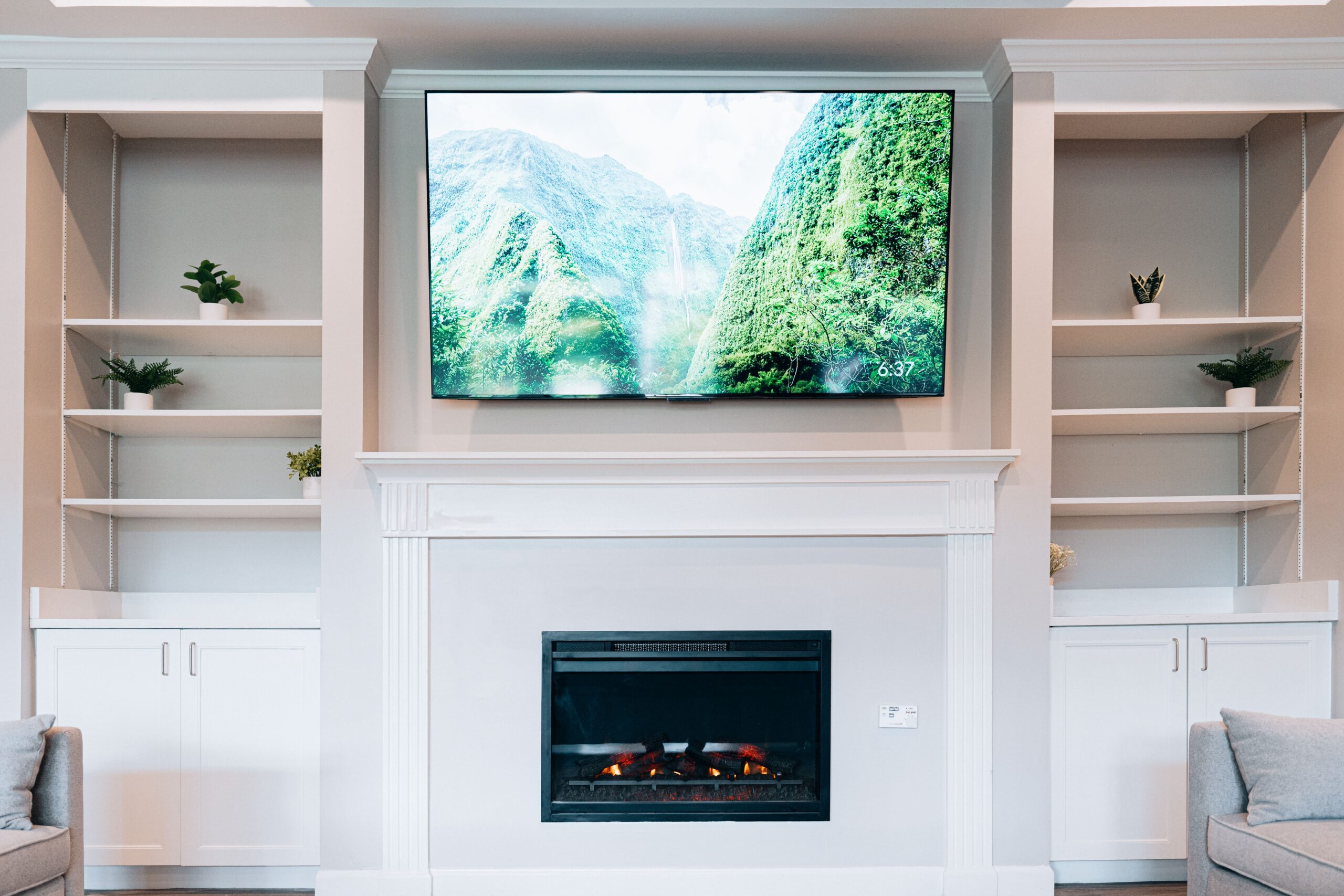
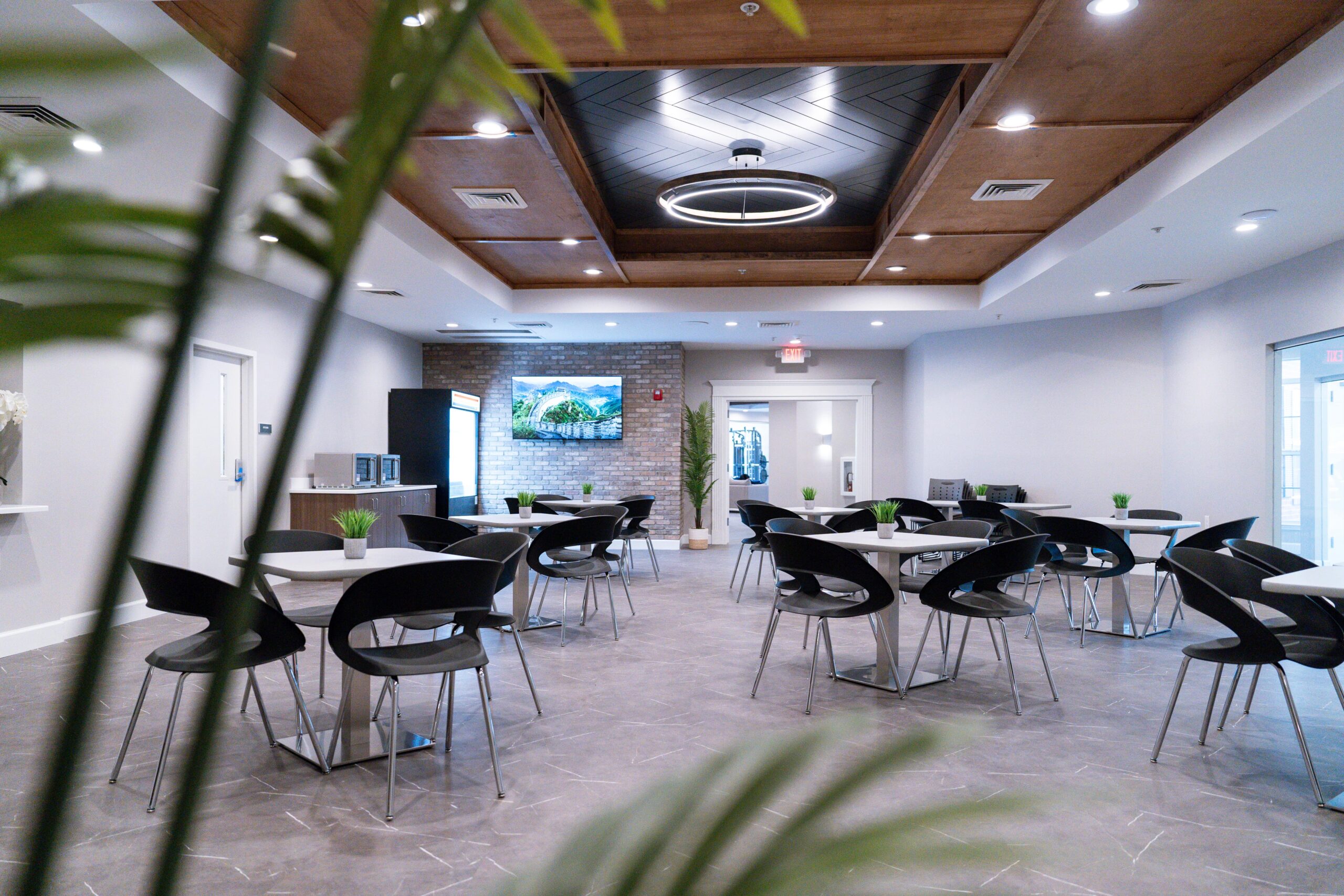
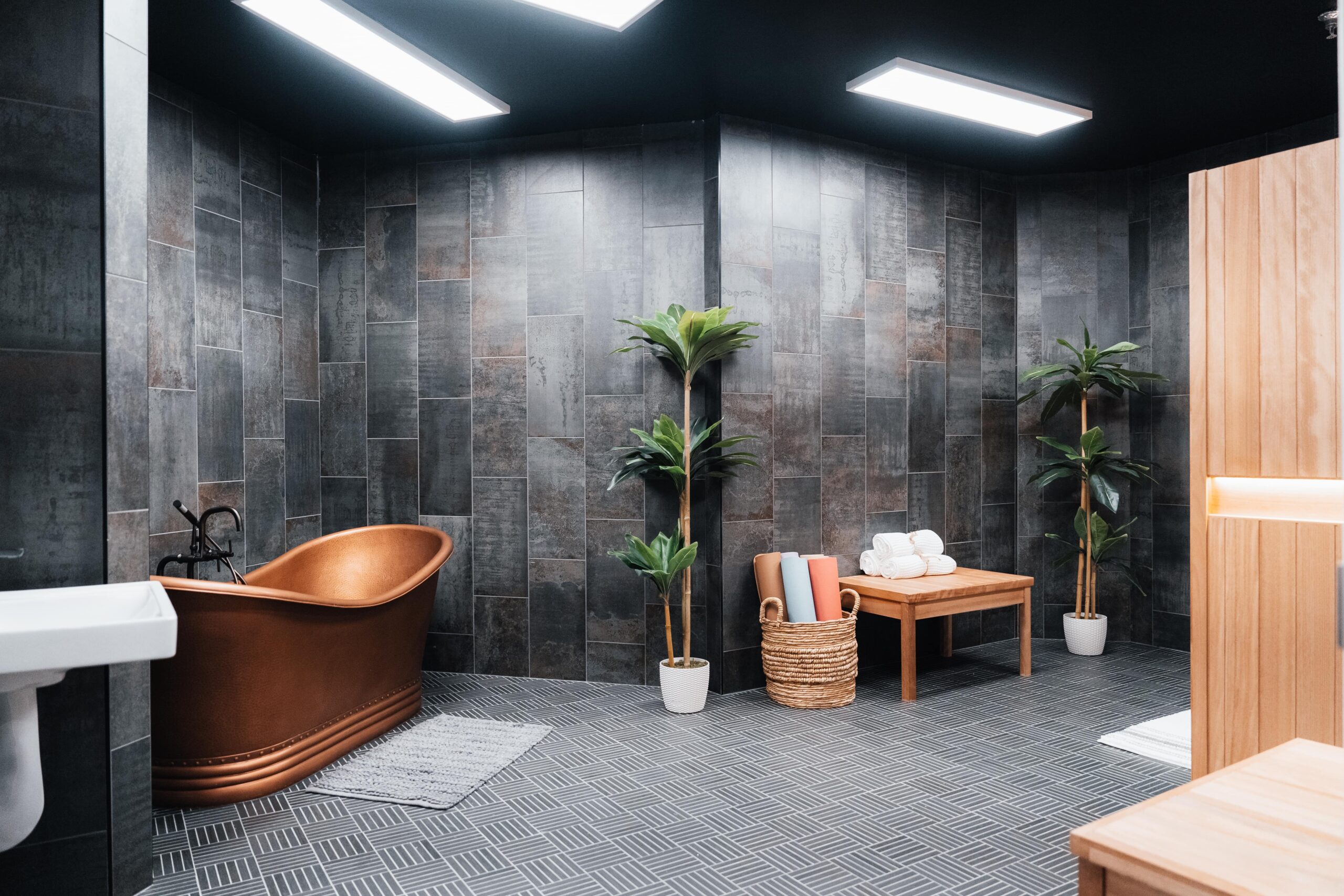
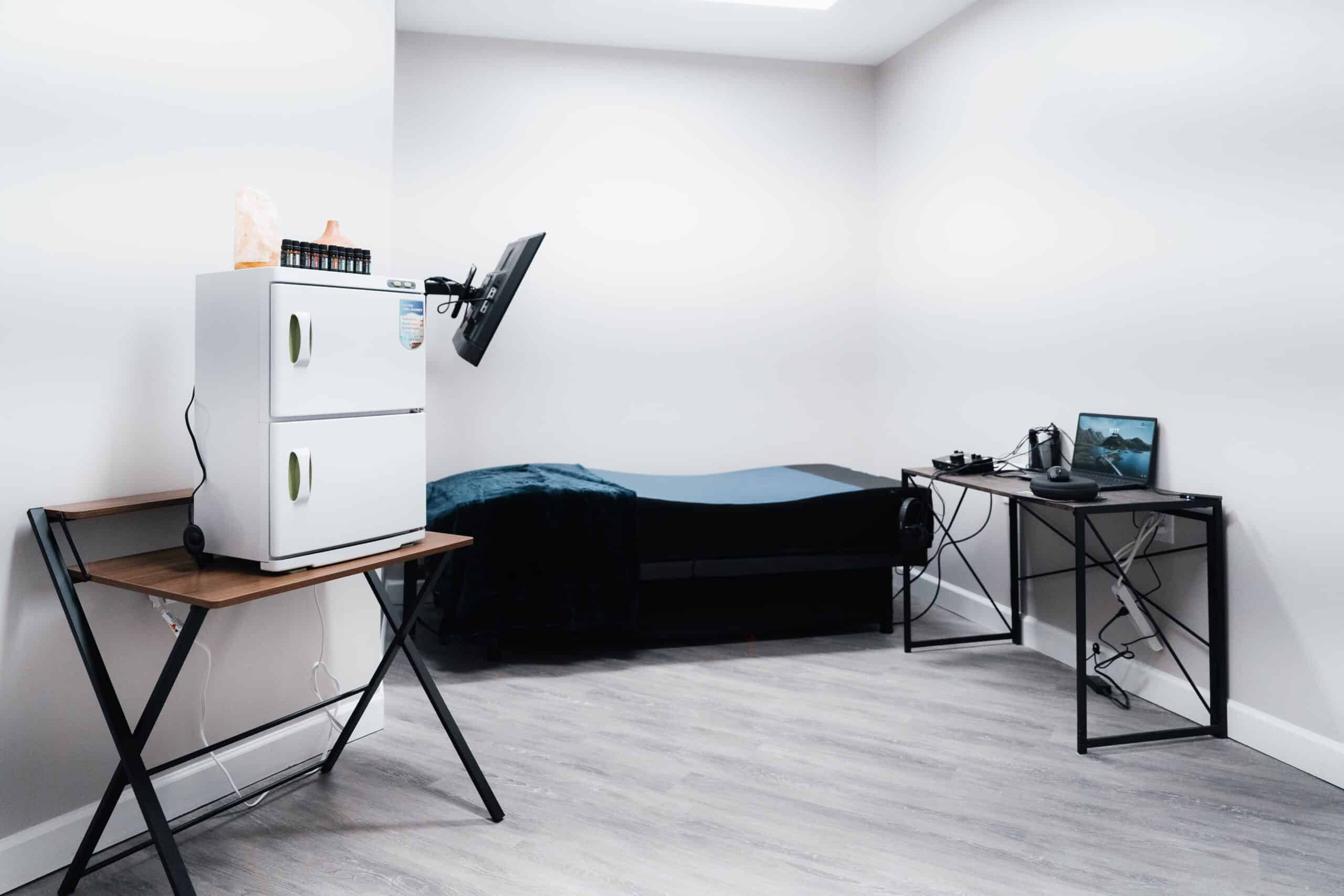
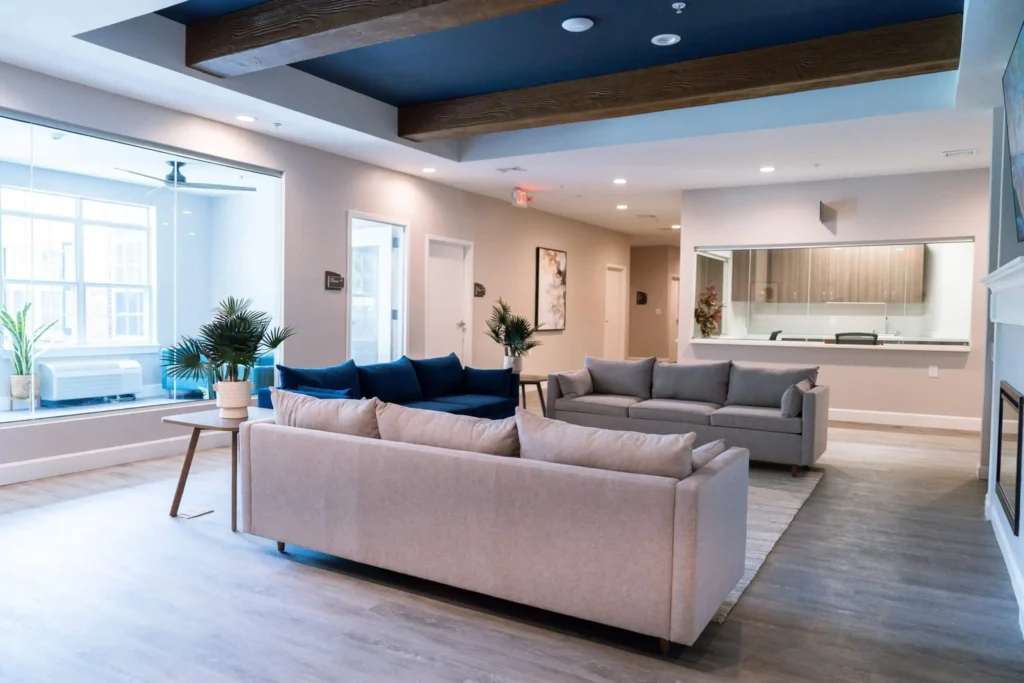
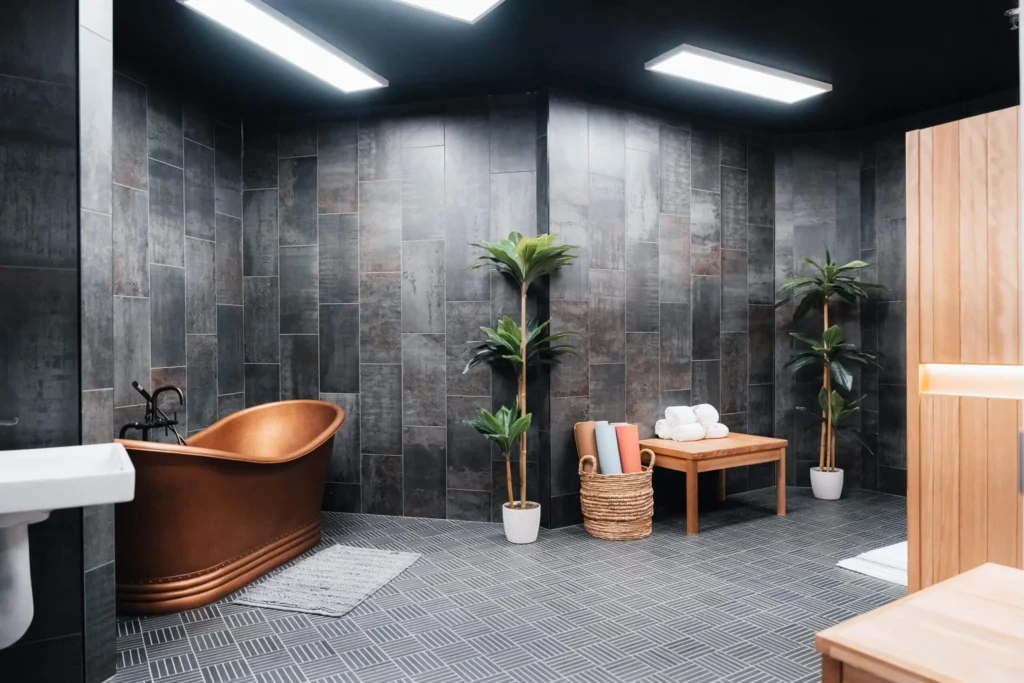
Days are built around evidence-based therapy: cognitive behavioral therapy and dialectical behavior therapy (CBT and DBT, structured skills for managing thoughts and intense emotions), alongside somatic therapy that works with the body to release tension stored from trauma. Arbor also uses advanced tools many programs do not, including Alpha-Stim, a small device that sends a gentle current through ear clips to ease anxiety, biosound therapy that pairs music and vibration to quiet the nervous system, and genetic testing that helps match medications to a person’s biology. The comfortable setting is a clinical decision, not a perk: a private chef, a spa with sauna and cold plunge, a sensory room, and a quiet theater exist because physical calm and dignity make hard therapeutic work more possible. Families driving up from Alabama are welcome to see the space first.
Treating Co-Occurring Mental Health and Substance Use
Mental illness rarely arrives alone. It is common for depression or trauma to travel with a drink that got out of hand or a prescription that stopped being about pain. When a mental health condition and a substance use problem show up together, clinicians call it a co-occurring disorder, or dual diagnosis, and treating only one side tends to let the other pull a person back down.
Alabama has not been spared this pattern. The state’s Department of Mental Health, which runs its public behavioral health system, has tracked a sharp rise in substance use over recent years, and much of it overlaps with untreated depression, anxiety, and trauma. More than one in five U.S. adults lives with a mental illness in a given year, according to the National Institute of Mental Health, and a meaningful share are managing a substance problem at the same time. Arbor’s dual diagnosis program is built to treat both at once. For a North Alabama family already struggling to find a residential bed, a program that handles both conditions under one roof removes one more thing to coordinate across state lines.
Blue Cross Blue Shield of Alabama and Starting the Process
The question that quietly decides most of this is whether insurance will travel across the state line. For Blue Cross Blue Shield of Alabama, the answer at Arbor is yes. Arbor Wellness is in-network with Blue Cross Blue Shield of Alabama, and residential treatment is included in that agreement. Because Blue Cross is the plan a great many Alabama families carry, that single fact is often what turns the drive north from an idea into a real option.
Arbor is also in-network with Aetna and Cigna for families whose coverage runs through those plans. A good first step is to read how Blue Cross Blue Shield coverage applies to residential mental health care, and the admissions team will confirm exactly what a specific plan covers, in plain terms, before anyone commits to anything.
From Alabama to Arbor Wellness
Most of the people who reach out about Arbor are not the patient. They are the one who has been holding everything together, calling on a lunch break, wondering whether two hours is too far to ask. It is not too far, and you are not overreacting by looking. If someone you love in Huntsville, Decatur, or anywhere in Alabama needs a level of mental health care the state cannot easily provide, Arbor is a short drive up I-65, and residential care for trauma, depression, and co-occurring conditions is here for the adults who need it. You can begin with Arbor’s admissions team, who will verify your benefits and walk you through what arriving actually looks like. If you are not ready today, that is all right. The road north will still be here when you are.
Insurance Can Help Cover the Cost of Treatment
We work with most major health insurance plans—including those with out-of-network benefits—to help make detox and recovery more affordable.
Click below to verify your coverage and explore your options today.






Meet the Experts Behind Your Care
At Arbor Wellness, every team member is dedicated to your recovery, from our clinicians to our support staff. Our experts combine proven treatments with compassionate care to support healing in mind, body, and spirit.

Dr. Seth Thompon
Amanda Johnson
Makayla George, LCSW
Real Quotes From clients who found healing
Faqs About mental health Treatment Near Alabama
Alabama has hospitals and outpatient providers, but specialized residential mental health treatment for adults is limited, and beds can be hard to find quickly. Many North Alabama families travel about two hours north on I-65 to Arbor Wellness in Brentwood, Tennessee, for that level of care. From Birmingham and points south, it is worth comparing the drive with options closer to home.
Roughly a hundred miles, about two hours by car. From Huntsville, I-565 connects to I-65 near Decatur, and I-65 runs north to Brentwood, which sits just south of Nashville. Because Brentwood is on the Alabama side of the city, families arrive before reaching downtown traffic. Nashville International Airport (BNA) is about twenty-five minutes away for relatives flying in.
Yes. Arbor Wellness is in-network with Blue Cross Blue Shield of Alabama, and residential treatment is included in that agreement. Arbor is also in-network with Aetna and Cigna. The admissions team will confirm exactly what a specific plan covers before anyone is admitted.
Adults living with complex trauma, treatment-resistant depression, severe anxiety, and co-occurring mental health and substance use conditions, especially when weekly outpatient care has not been enough. Arbor provides structured, live-in care with evidence-based therapy in a comfortable setting.
Sources
- Alabama Department of Mental Health. (n.d.). Understanding the opioid crisis. Retrieved from: https://mh.alabama.gov/understanding-the-opioid-crisis/. Accessed on July 15, 2026.
- American Society of Addiction Medicine. (n.d.). The ASAM criteria. Retrieved from: https://www.asam.org/asam-criteria. Accessed on July 15, 2026.
- National Institute of Mental Health. (n.d.). Mental illness statistics. Retrieved from: https://www.nimh.nih.gov/health/statistics/mental-illness. Accessed on July 15, 2026.
- National Institute of Mental Health. (n.d.). Post-traumatic stress disorder (PTSD). Retrieved from: https://www.nimh.nih.gov/health/publications/post-traumatic-stress-disorder-ptsd. Accessed on July 15, 2026.
- Substance Abuse and Mental Health Services Administration. (n.d.). Co-occurring disorders. Retrieved from: https://www.samhsa.gov/substance-use/treatment/co-occurring-disorders. Accessed on July 15, 2026.
Quick Facts About Arbor Wellness
- Where it is: Residential mental health care at Arbor Wellness in Brentwood, Tennessee, about two hours north of Huntsville up I-65. Arbor is not in Alabama; it serves Alabama residents who travel.
- Who it fits: Adults living with complex trauma, treatment-resistant depression, severe anxiety, and co-occurring conditions that need more than weekly outpatient care.
- Insurance: In-network with Blue Cross Blue Shield of Alabama, with residential care included, plus Aetna and Cigna.
- Honest scope: North Alabama is the realistic catchment. From Birmingham south, it is worth weighing the drive against options closer to home.