












When Is Residential Mental Health Treatment Necessary?
Nobody is given a clear signal that outpatient care has run out. There are specific markers, though, and most families recognize several of them the moment somebody names them out loud.
Outpatient care fails quietly. There is no moment where a therapist says this is not working; there is a slow accumulation of rescheduled appointments, a medication list that keeps growing without much changing, and a person who is technically in treatment and unmistakably worse than they were in the spring.
Arbor Wellness provides residential mental health treatment for adults in Brentwood, south of Nashville, and the calls that reach us are almost always at that stage rather than at a crisis. Whether you are the person whose functioning has been slipping or the one who has watched it happen from the next room, the question worth answering is not how bad things have to get. It is whether the current level of care is proportionate to what is actually happening.
The Arithmetic Nobody Says Out Loud
A weekly therapy session is 50 minutes. A week has 168 hours. That ratio works, and works well, when the other 167 hours are broadly survivable and the therapy is doing repair on something contained.
It stops working when the rest of the week is where the illness lives. When a person spends five days actively deteriorating and one hour describing it, the session becomes a status report rather than an intervention. Medication changes take four to six weeks to evaluate, which means a psychiatrist adjusting a dose in September will not know whether it worked until late October, and during that entire window nothing else has changed.
Residential treatment changes the ratio rather than the technique. The therapy is not different in kind from what a good outpatient clinician does. There is simply vastly more of it, delivered against a day that has been cleared of everything working against it.
The Specific Markers
Clinicians use structured criteria for this, but the signs that bring people to the question are ordinary and recognizable.
- Multiple medication trials without response. Two or three adequate trials, taken as prescribed for long enough to judge, with the condition holding or worsening. This is a recognized clinical category rather than a verdict on the person.
- Functioning has genuinely come apart. Not a hard week. Sleep has become erratic or nonexistent, meals are unreliable, hygiene has slipped, and work or school is being missed in a pattern rather than occasionally.
- The appointments are not being kept. When the illness itself is what prevents somebody from getting to the appointment that would treat it, outpatient care has a structural problem no amount of willingness solves.
- Repeat emergency contacts. More than one crisis-line call or emergency department visit in a few months means the person is cycling through stabilization without anything holding between episodes.
- Substance use has joined the picture. When drinking or drug use has become how somebody manages symptoms, both need addressing at once. Dual diagnosis treatment exists because taking them in sequence usually fails.
- Household is running on crisis management. When the people around a person have reorganized their own lives around monitoring them, that is a signal about severity as well as an unsustainable arrangement.
- Suicidal thinking that persists. Ongoing thoughts of self-harm, even without immediate intent, warrant a level of care that does not send somebody home alone at the end of the hour. Treatment for suicidal ideation is a defined clinical level rather than something that only exists inside a hospital.
One qualifier that matters. If someone is in immediate danger right now, that is an emergency rather than a placement decision. Call 911, or call or text 988 for the Suicide and Crisis Lifeline. Stabilization comes first, and residential is what can follow it.
Residential Is Not a Psychiatric Hospital
The word inpatient carries decades of unhelpful associations, and it stops a great many people from considering the level of care that would actually help them.
A psychiatric hospital unit is built for acute crisis. It is often locked, it is measured in days, and its job is to get somebody out of immediate danger. That is necessary work and it is not what residential treatment is.
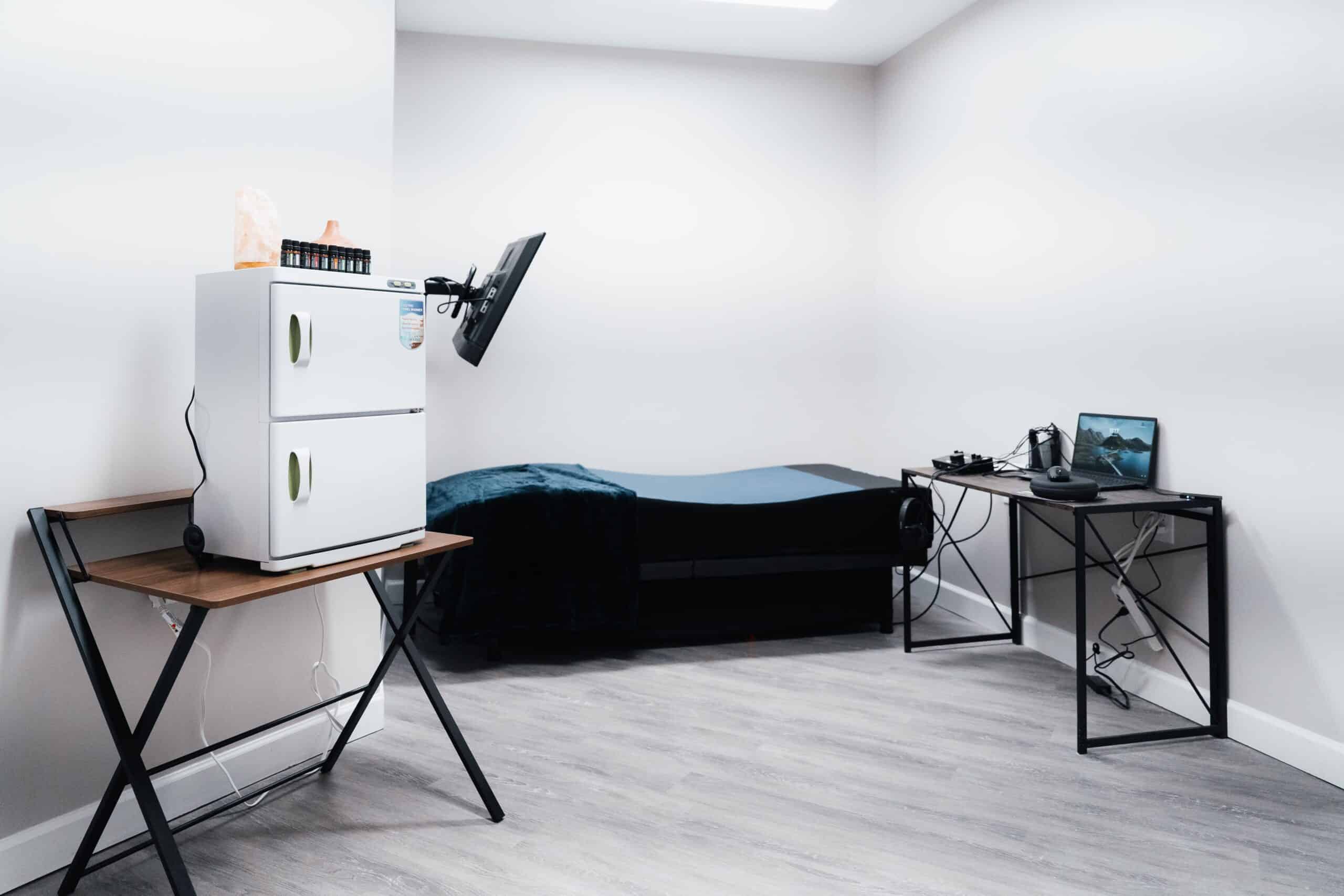
Residential is voluntary and unlocked, and it is measured in weeks. Adults keep their belongings, sleep in a bedroom rather than a ward, take part in a structured schedule, and can leave. What a person gives up by being there is the ability to avoid the difficult parts of the work, which is the mechanism rather than a side effect. Nobody is held, and nobody is committed.
The other common assumption worth correcting is that residential is only for people who have already lost everything. In practice a large share of adults in residential mental health care were functioning outwardly right up until they arrived, holding jobs and raising children while something underneath had been failing for a year.
Trusted and Recognized by Leading Mental Health Organizations





What the Weeks Actually Consist Of
The day is structured to a degree that surprises people, on purpose. Unstructured time is where symptoms expand.
The clinical core is the same set of evidence-based approaches a good outpatient clinician uses, at a completely different density. Cognitive behavioral therapy works on thought patterns that have hardened into rules a person stopped examining years ago. Dialectical behavior therapy teaches distress tolerance and emotion regulation, meaning specific things to do when a feeling arrives faster than reasoning can catch it. Somatic therapy addresses the tension that trauma parks in a jaw, a chest, and a set of shoulders, which talk therapy alone often cannot reach.
Individual therapy with a master’s-level clinician runs weekly alongside psychiatric care and genetic testing that narrows which medications a person’s body is likely to tolerate, rather than working through them one at a time over a year. Two additions are uncommon in residential settings: Alpha-Stim, a handheld unit that runs a low-level current through clips worn on the earlobes, used to take the edge off anxiety without another prescription, and biosound therapy, which combines music, guided imagery, and low-frequency vibration felt through the body, and can help somebody whose system has been on high alert for years relearn what calm physically feels like.
Family therapy is part of the treatment rather than a visiting policy, because a household reorganizes itself around a serious illness and that reorganization needs its own repair.
Who It Fits, and Who It Does Not
Arbor treats high-acuity adult mental health: complex trauma, treatment-resistant depression, bipolar disorder, severe anxiety, and related conditions that have stopped responding to the usual sequence. That is a specific brief rather than a general one.
It is not the right first step for someone in acute medical or psychiatric emergency, who needs stabilization first. It is not right for someone whose symptoms are mild, whose home is stable, and who has good support, since outpatient care can do that work without the disruption. And residential care is a real disruption: weeks away from work and family, at meaningful cost. A program that tells you it is right for everyone is selling rather than assessing.
An honest assessment will say plainly if a lower level of care fits, and that answer is a good outcome rather than a wasted call.
Getting There From Around Nashville
Arbor is at 200 Winners Circle South in Brentwood, in Williamson County, a few minutes off I-65 and just south of the Nashville metro proper. Franklin and Cool Springs are minutes away, downtown Nashville and Vanderbilt around 20, and Nashville International about 25.
That location does some quiet clinical work. Brentwood is far enough from a person’s daily architecture that the commute, the desk, and the 9 p.m. spiral in the same room are genuinely interrupted, and close enough that a spouse or a parent can come for a family session on a Saturday and sleep at home. Adults also travel from Kentucky and Alabama straight down or up I-65, which is one road the whole way.
Getting a Clear Answer About the Level of Care
The decision worth making is not which program. It is which level, and a clinician can work through that in one conversation rather than leaving you to weigh it alone at midnight. A call is an assessment: what the past year has actually looked like, what has been tried, and a straight answer about whether residential care fits, whether a partial hospitalization or intensive outpatient program would serve better, or whether something needs to happen first. Parents, partners, and adult children call and ask their own questions before the person in question is involved, which is a normal way to start. Reach out to our admissions team and we will go through your benefits and what an arrival day involves, down to who meets the car. If someone is in danger tonight, call 911 or 988 first.
Insurance Can Help Cover the Cost of Treatment
We work with most major health insurance plans—including those with out-of-network benefits—to help make detox and recovery more affordable.
Click below to verify your coverage and explore your options today.






Meet the Experts Behind Your Care
At Arbor Wellness, every team member is dedicated to your recovery, from our clinicians to our support staff. Our experts combine proven treatments with compassionate care to support healing in mind, body, and spirit.
Amanda Johnson

Makayla George, LCSW

Ainsley Cousin
Real Quotes From clients who found healing
Frequently Asked Questions - When Is Residential Treatment Necessary?
The clearest single marker is two or three adequate medication trials plus therapy, taken as prescribed for long enough to judge, with the situation holding or getting worse. After that, look at function rather than diagnosis: whether sleep, meals, hygiene, and work have become unreliable in a pattern rather than occasionally, and whether appointments are being missed because the illness itself prevents attendance. Repeated crisis-line calls or emergency visits within a few months point the same direction.
No. A psychiatric hospital unit is for acute crisis, is frequently locked, and is measured in days. Residential treatment is voluntary and unlocked and is measured in weeks. Adults keep their belongings, sleep in a bedroom, follow a structured schedule of therapy and psychiatric care, and can leave. Residential usually follows stabilization rather than replacing it, which is why an honest assessment comes first. If somebody is in immediate danger, that is an emergency and 911 or 988 comes before anything else.
Length is individual and is set by clinical progress alongside coverage review, commonly running several weeks. On employment, job-protected leave exists for serious health conditions and a great many people use it, which is worth raising with your employer’s human resources team or an employment attorney rather than assuming the worst. The more common outcome we see is that untreated deterioration is what eventually costs somebody their job, not a planned absence.
Frequently, yes. Arbor Wellness is in-network with Aetna, including Meritain, Banner Health, Coventry Health Care, First Health Group, Innovation Health, and Sutter Health, and with Cigna including Cigna Allegiance, and with Blue Cross Blue Shield of Alabama where the contract covers residential treatment. TRICARE applies to patients 21 and under only. Every policy has its own deductible, authorization requirements, and length-of-stay review, so the admissions team verifies your specific plan and tells you what it covers before anyone is admitted.
Sources
- National Institute of Mental Health. (n.d.). Mental illness statistics. Retrieved from: https://www.nimh.nih.gov/health/statistics/mental-illness. Accessed on September 23, 2026.
- National Institute of Mental Health. (n.d.). Depression. Retrieved from: https://www.nimh.nih.gov/health/publications/depression. Accessed on September 23, 2026.
- National Institute of Mental Health. (n.d.). Suicide prevention. Retrieved from: https://www.nimh.nih.gov/health/topics/suicide-prevention. Accessed on September 23, 2026.
- Substance Abuse and Mental Health Services Administration. (n.d.). Co-occurring disorders. Retrieved from: https://www.samhsa.gov/substance-use/treatment/co-occurring-disorders. Accessed on September 23, 2026.
- American Society of Addiction Medicine. (n.d.). The ASAM criteria. Retrieved from: https://www.asam.org/asam-criteria. Accessed on September 23, 2026.
- Tennessee Department of Mental Health and Substance Abuse Services. (n.d.). Crisis services continuum. Retrieved from: https://www.tn.gov/behavioral-health/crisis/continuum.html. Accessed on September 23, 2026.
Overview
- The core question: Not how severe the diagnosis is, but whether 50 minutes a week can hold against 168 hours of everything else.
- The strongest single indicator: Two or three good-faith medication trials and a course of therapy, with the situation still deteriorating.
- The second: The daily architecture has collapsed. Sleep, meals, work, and hygiene have stopped being reliable.
- What residential is not: Not an emergency room, not a locked unit, not a commitment. Adults arrive voluntarily and can leave.
- What it is: Living somewhere for a stretch of weeks where the day is organized around treatment instead of the other way round.