






Residential Mental Health Treatment Near Huntsville, Two Hours North on I-65
For adults in Madison County whose condition has outrun outpatient care, live-in psychiatric treatment is closer than most people expect, and the coverage question has a specific answer.
Trusted and Recognized by Leading Mental Health Organizations




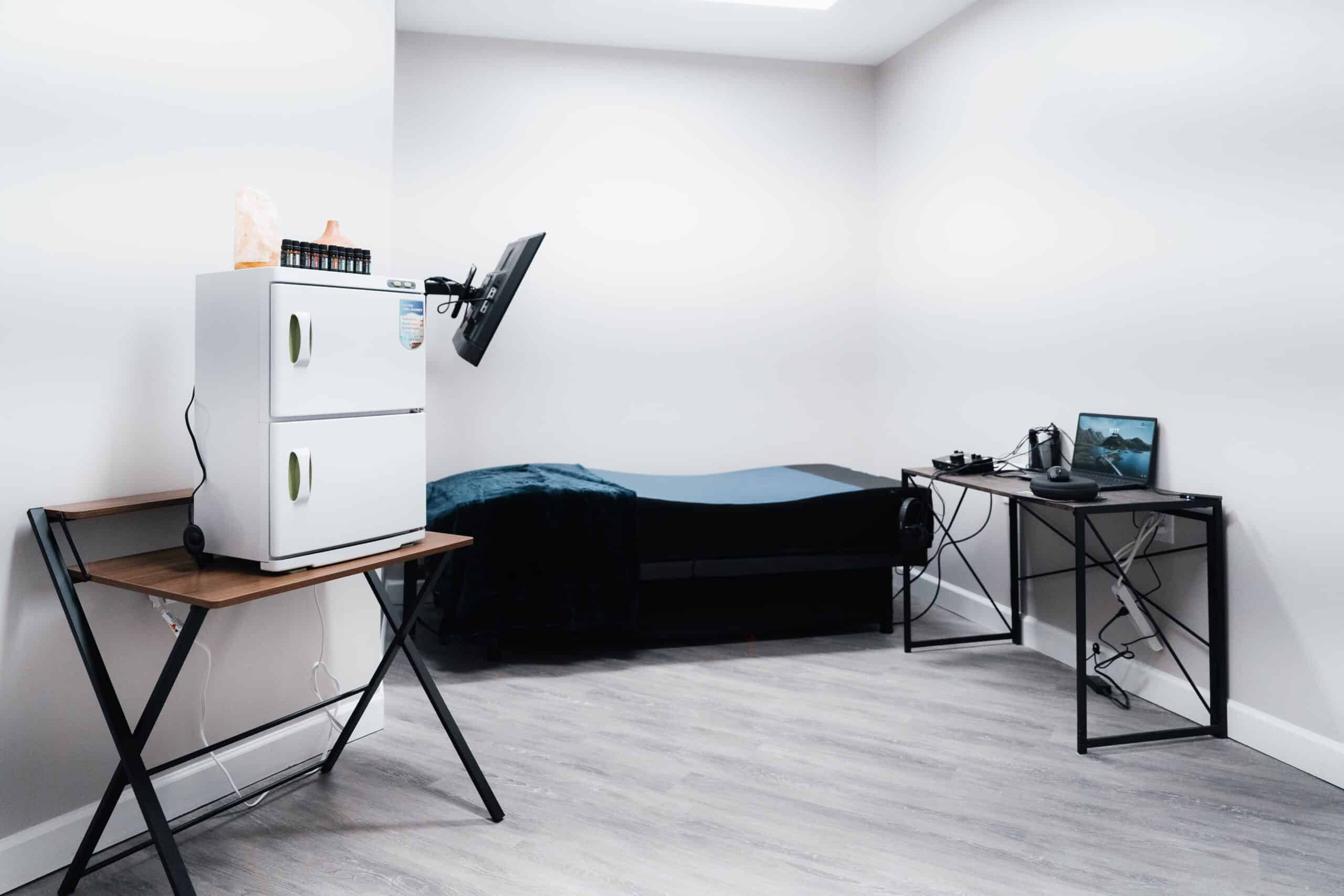
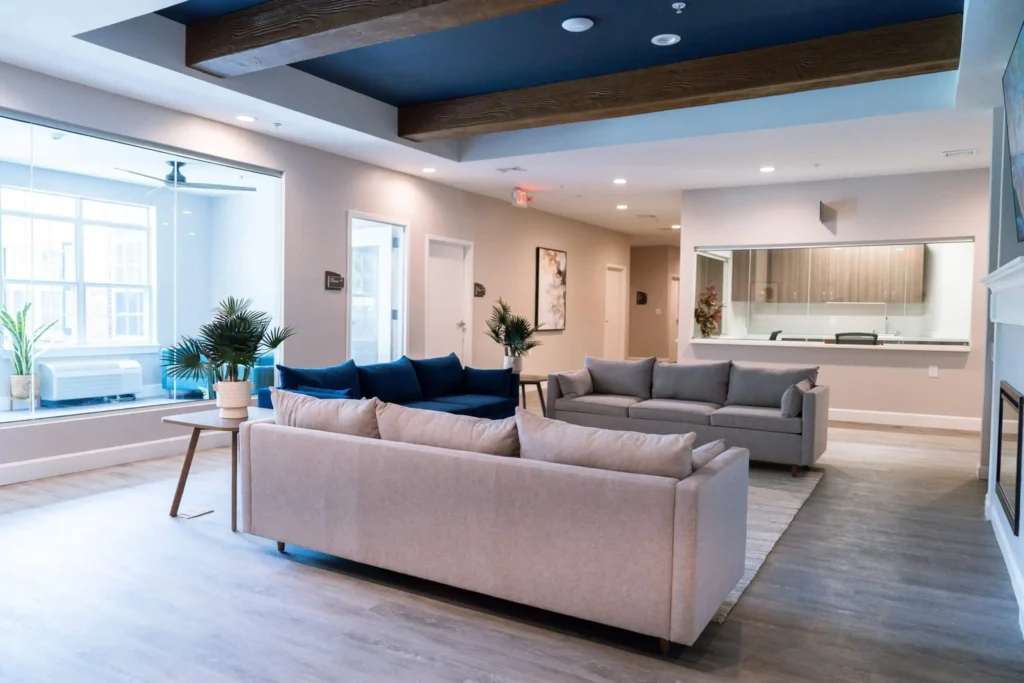
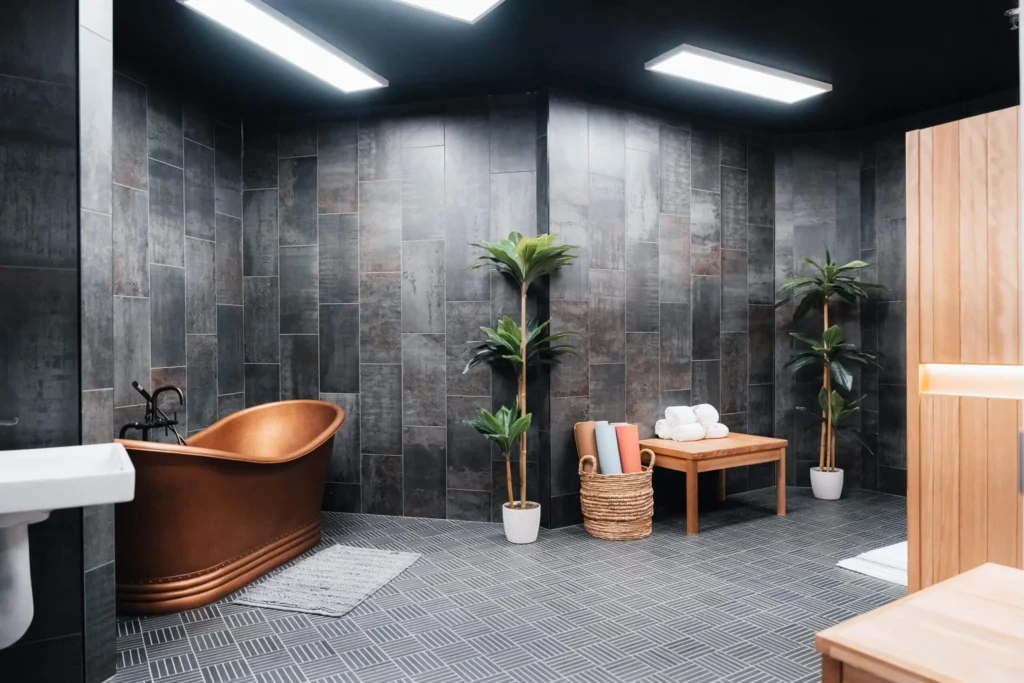
Our Mental Health Services Facilities Near Huntsville, AL
Our medically-assisted detox process is structured to be as straightforward and supportive as possible, prioritizing the clients’ well-being above all. When clients begin the process, we conduct an over-the-phone assessment that enables the team to understand the needs and circumstances of each client. This initial conversation forms the blueprint for a personalized detox plan.
Key Features of Our Mental Health Services
Our detox program is the first step toward healing, with 24/7 medical supervision, personalized care, and a seamless transition to long-term treatment.
Short Term Stay
24/7 Medical Supervision
Insurance Accepted
Dual Diagnosis Support
Your Partner for Mental Health Services Near Huntsville, AL
We provide a full spectrum of mental health treatment options designed to meet Huntsville residents at various points in their recovery journey. Our comprehensive approach allows for flexible movement between levels of care based on individual progress, academic schedules, and changing life circumstances.
Detox Services
Our medically supervised detox program offers a safe, medically monitored environment for individuals beginning their recovery from substance use disorders. With 24/7 medical supervision and compassionate support, our detox services help manage withdrawal symptoms while preparing clients for ongoing mental health treatment and recovery.
Residential Treatment
Our residential treatment program provides intensive, round-the-clock care in a structured therapeutic community environment. This program is particularly beneficial for Huntsville residents who need comprehensive support while addressing complex mental health challenges and developing essential coping skills and life management strategies.
Partial Hospitalization Program (PHP)
The Partial Hospitalization Program delivers intensive treatment during daytime hours while allowing clients to return home each evening. This program provides clinical intensity and support while helping individuals maintain important connections to their academic programs, work responsibilities, and family relationships.
Intensive Outpatient Program (IOP)
Our Intensive Outpatient Program is specifically designed for Huntsville residents who need ongoing therapeutic support while maintaining academic studies, employment, or family obligations. This flexible program provides comprehensive treatment through multiple weekly sessions that can be scheduled around other commitments.
You Are Not Alone.
You Deserve To Get Help.
Arbor Wellness is an industry leader in mental health treatment. Our team of top medical experts specialize in dual diagnosis treatment and are committed to ensuring that each patient is treated as an individual.
Call us today, we’re available 24/7.
Huntsville is a town of people who solve things. Redstone Arsenal, Marshall, the engineering firms stacked through Cummings Research Park, a workforce with more advanced degrees per capita than almost anywhere in the South. That culture is a genuine strength and it also produces a specific way of handling a mental health problem, which is to treat it as a systems failure you should be able to debug yourself, quietly, without escalating it.
Arbor Wellness provides residential mental health treatment for adults in Brentwood, a Williamson County suburb south of Nashville, and Alabama is among the states we serve from Tennessee. From Madison County it is one interstate and about two hours. Whether you are the person who has been debugging this alone or the spouse who stopped believing the fine answer some time ago, the useful question is whether the level of care matches what is actually happening.
The Thing Huntsville Does Not Talk About
There is a particular obstacle here that does not exist in most cities, and pretending otherwise would be unhelpful.
A large share of the Huntsville workforce holds a security clearance. The fear that seeking mental health treatment will jeopardize it is widespread, it is taken seriously by the people who hold it, and it delays care by years. We are not in a position to give anyone advice about their clearance, and nobody should take guidance on that from a treatment provider’s website. What we can say is that this is a question with actual answers, that the security community’s published guidance on mental health has changed substantially over the past decade, and that the right people to ask are a security officer, a cleared-defense employment attorney, or the guidance issued by the relevant adjudicating authority.
The reason to raise it at all is that the fear does more damage than the disclosure usually does. An untreated condition that eventually produces a crisis is considerably harder to manage, in every sense, than treatment entered voluntarily and early. If confidentiality is the thing holding you back, that is a legitimate question to put directly to an admissions team and get a straight answer about, rather than a reason to keep waiting.
What Madison County Has, and Where It Thins
Huntsville is not underserved in the way rural Alabama is. Huntsville Hospital is a large system, there are psychiatrists and therapists across Madison and Limestone counties, and the Alabama Department of Mental Health operates a crisis center network around the clock, with one of the state’s four in-state 988 answering centers based here.
Where the state’s system is structurally thin is the middle, and this is a national pattern rather than an Alabama failing. Alabama’s public behavioral health structure runs at two ends: community providers delivering prevention, treatment, and peer support statewide, and a small number of state psychiatric facilities for the most acute cases. Both do necessary work. Neither is what a family is describing when they say they want their adult son somewhere structured and safe for a month while a competent team works out what is actually wrong.
The national numbers are blunt about the scale. In 2022 an estimated 59.3 million U.S. adults were living with a mental illness, 23.1 percent of the adult population, and of that group 30.0 million received any mental health treatment during the year. Living in a city with excellent medical infrastructure does not automatically place a person on the treated side of that split.
What Residential Care Actually Involves
Residential treatment means a person lives at the facility for a stretch of weeks rather than commuting to appointments around a job. The day gets built around the clinical work instead of squeezed in beside it, and that change of ratio is the mechanism.
It is voluntary. Adults arrive because they decided to, keep their belongings, sleep in a bedroom rather than a ward, and can leave. It is not an emergency room, not a locked unit, and not a commitment. If someone is in immediate danger right now, that is an emergency and belongs with 911 or the 988 Suicide and Crisis Lifeline; stabilization comes first and residential is what can follow it.
Arbor was built for adults who have already been through the standard sequence: outpatient therapy that plateaued, two or three medication trials that did not hold, or a stretch where functioning quietly collapsed while everyone assumed it was stress.
What the Clinical Work Consists Of
- Complex trauma: Repeated or prolonged trauma leaves a different mark than a single event, and complex PTSD treatment works on a longer timeline than a standard course.
- Treatment-resistant depression: When two or three medication trials have come and gone, that is a recognized clinical category with its own pathway rather than a verdict on the person.
- Severe anxiety and panic: When avoidance has narrowed a life to a few safe rooms, anxiety treatment in a residential setting rebuilds tolerance in a way weekly exposure homework rarely manages.
- Bipolar disorder: Bipolar disorder treatment usually needs a stretch of stable days, consistent sleep, and close medication observation before anyone can tell what is working.
- Co-occurring substance use: Where a mental health condition and a substance problem are both present, dual diagnosis care addresses both rather than taking one and then the other.
Days run on cognitive behavioral therapy, dialectical behavior therapy, and somatic therapy, with weekly individual sessions and psychiatric care alongside genetic testing that narrows which medications a person’s body is likely to tolerate. Two less common tools sit alongside them: Alpha-Stim, a handheld unit running a low-level current through earlobe clips to take the edge off anxiety without another prescription, and biosound therapy, which uses music, guided imagery, and low-frequency vibration felt through the body.
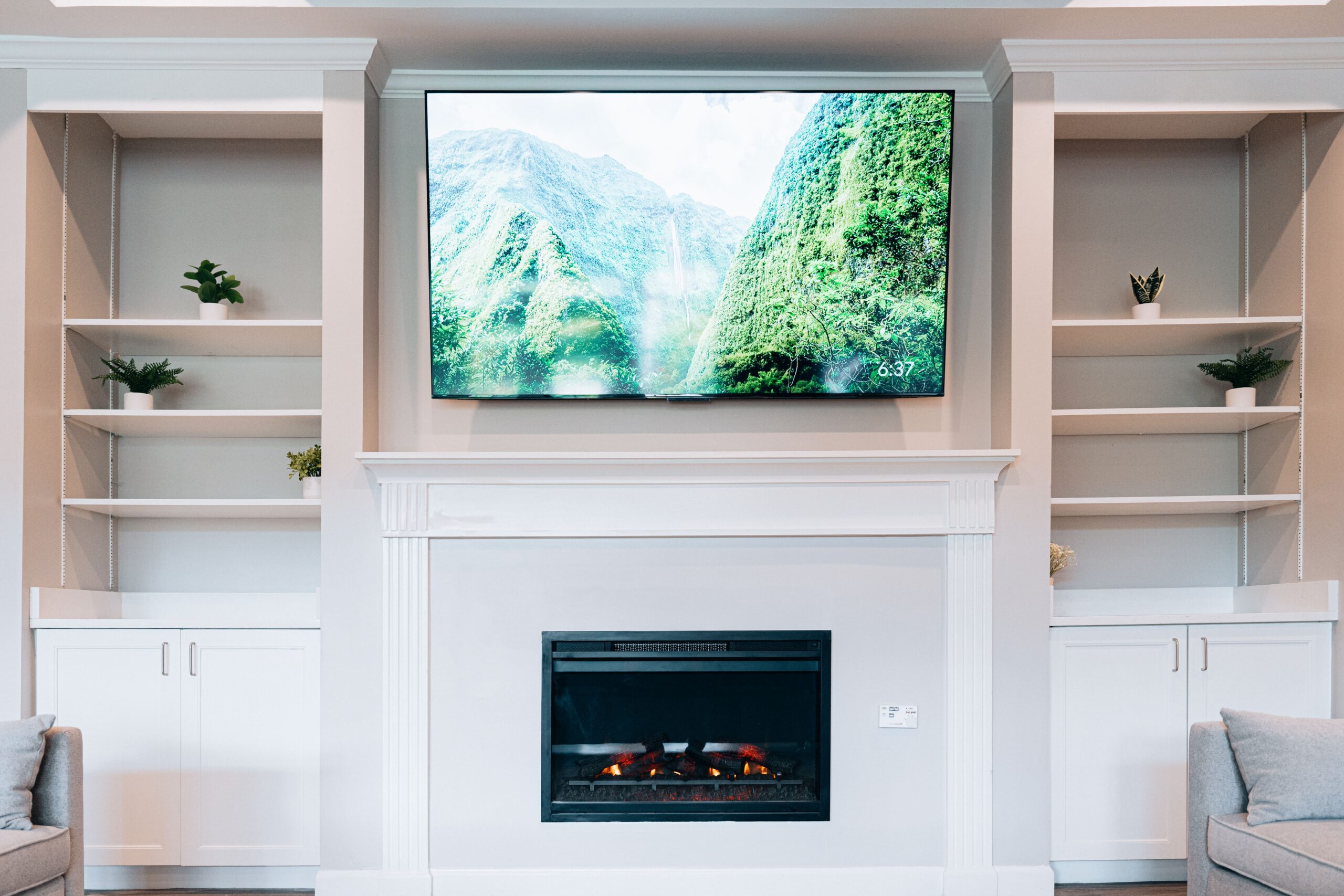
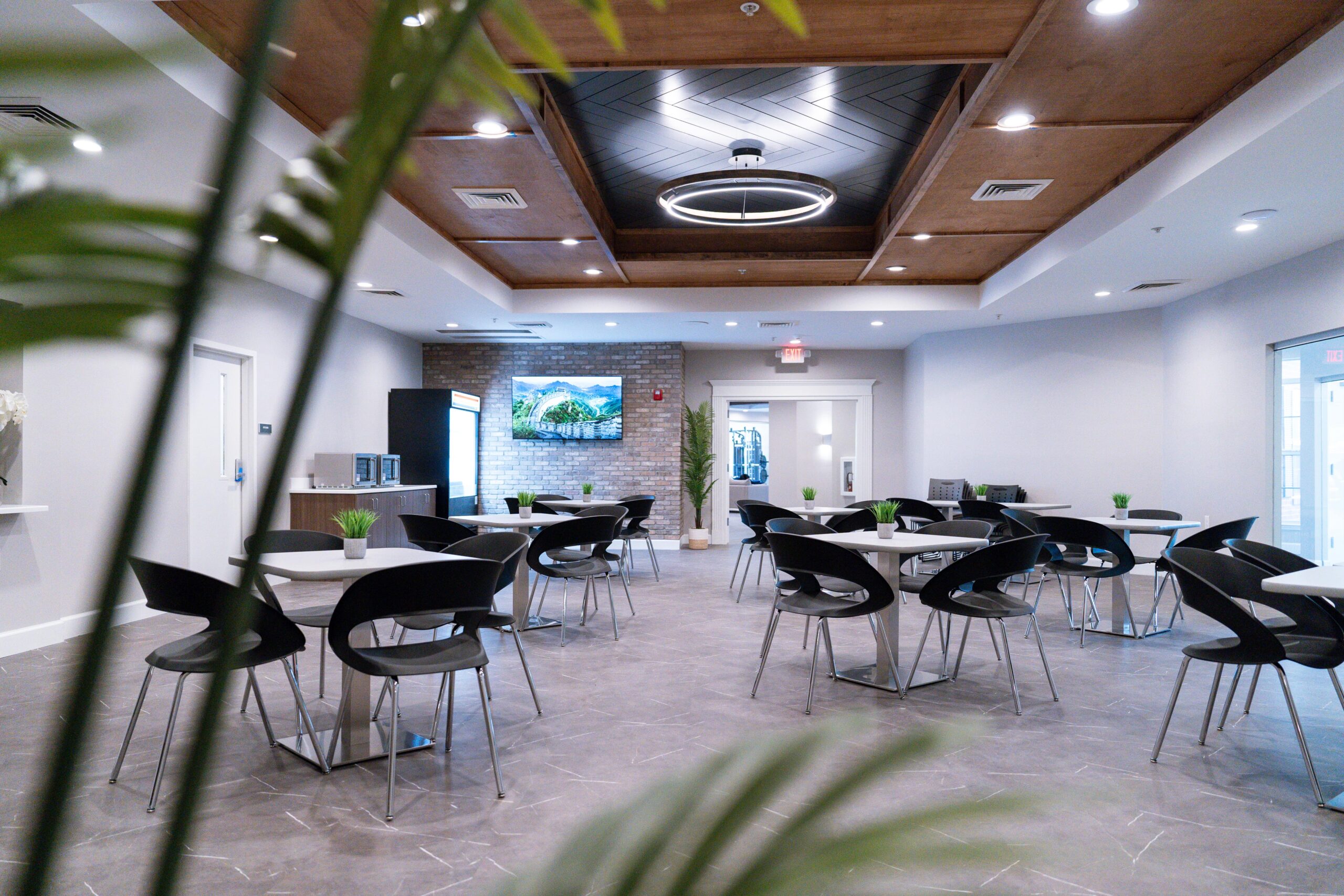
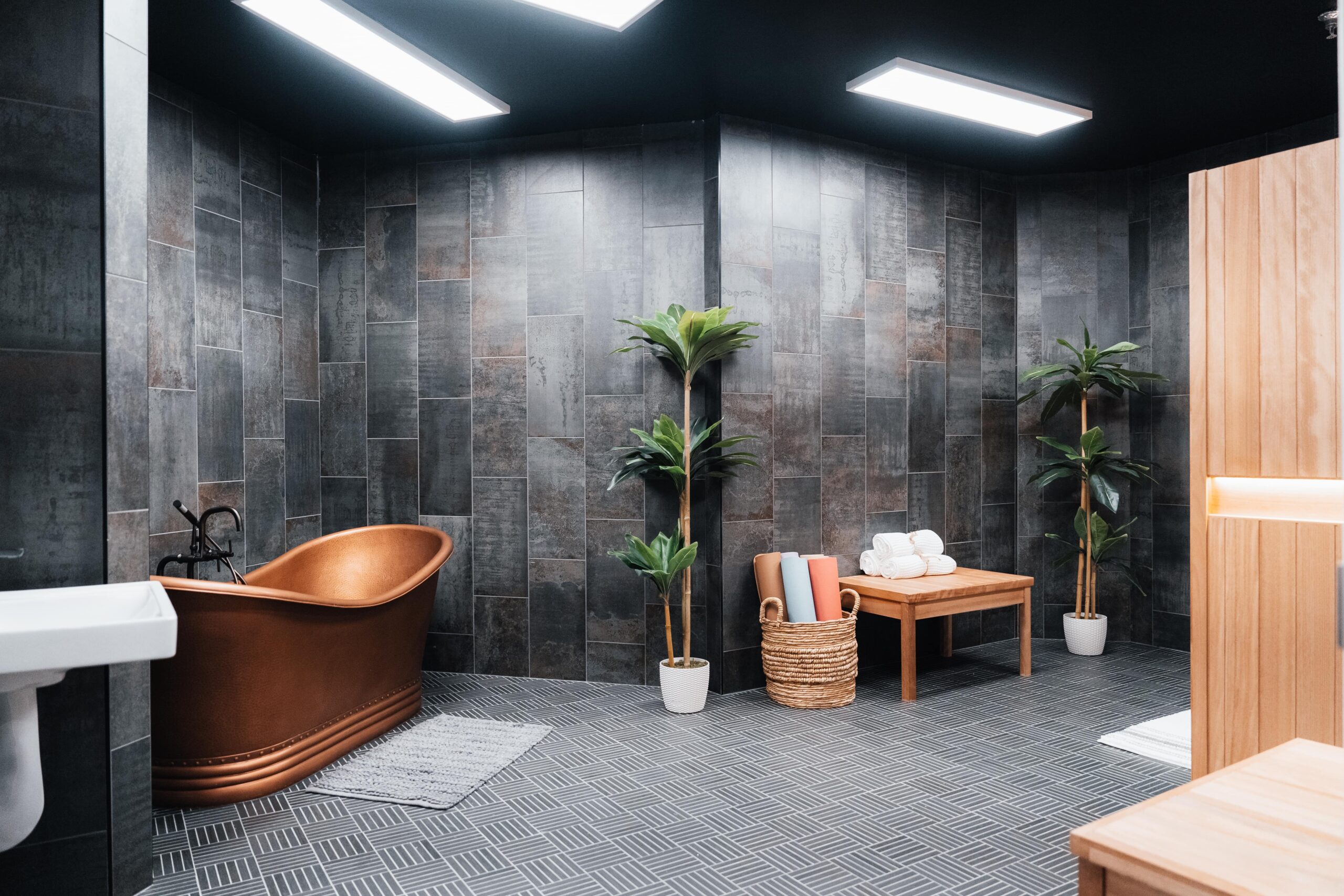
The setting is a clinical decision rather than a flourish. A private chef, a spa with a sauna and cold plunge, a sensory room, and trauma-informed yoga exist because physical calm and dignity make hard therapeutic work possible, and an adult who feels treated like a person participates differently from one who feels processed.
Two Hours Up I-65
The route is straightforward enough to describe in a sentence. I-565 west out of Huntsville to I-65 north, then across the state line past Ardmore, up through Pulaski, Columbia, and Spring Hill, and into Brentwood through Cool Springs before Nashville traffic ever becomes the problem. Roughly 120 miles, about two hours. Arbor sits a few minutes off the interstate.
For relatives flying, Huntsville International to Nashville is a short hop, and Nashville International is about 25 minutes from the property.
Clinicians do not treat that distance as pure cost, and this is the part worth sitting with. A condition builds itself into a specific daily architecture: the same drive down Memorial Parkway, the same badge line, the same two people whose messages set everything off, the same 10 p.m. spiral in the same room. Two hours is enough separation for a nervous system to stop bracing, and close enough that a spouse can come up on a Saturday for family therapy and sleep at home that night.
Coverage, Which Usually Decides It
Here is the fact that matters most for a Madison County household, without a contact form in front of it. Arbor Wellness holds an in-network contract with Blue Cross Blue Shield of Alabama, and that contract covers residential treatment. Blue Cross is the card in a very large share of Alabama wallets, and for those families the network status is usually what moves this from something they are reading about to something they are doing.
Arbor is also in-network with Aetna, including its Meritain, Banner Health, Coventry Health Care, First Health Group, Innovation Health, and Sutter Health networks, and with Cigna including Cigna Allegiance. TRICARE is in-network for patients 21 and under only, which is worth stating plainly rather than leaving to be discovered, given how many households here carry it. Blue Cross plans issued by other states, and UnitedHealthcare or Optum plans, are not in Arbor’s network, and if that is your coverage our admissions team will say so at the start rather than after an assessment. There is a plain breakdown of how Blue Cross Blue Shield coverage works for residential care.
Insurance Can Help Cover the Cost of Treatment
We work with most major health insurance plans—including those with out-of-network benefits—to help make detox and recovery more affordable.
Click below to verify your coverage and explore your options today.






Start From Huntsville Without Committing to Anything
Reaching out does not obligate anyone to admit anywhere. It is a conversation in which a clinician hears the real shape of the past year and says plainly whether the residential level fits, whether something closer to Madison County would serve better, or whether the picture points somewhere else. If the clearance question is what has been holding this up, ask it directly and get a straight answer rather than continuing to guess. Spouses and parents call and ask their own questions first, which is a reasonable way to begin. Arbor’s admissions team can check your benefits and describe an arrival day down to what to pack and who meets the car. If someone is in danger tonight, call or text 988 before anything else.
Meet the Experts Behind Your Care
At Arbor Wellness, every team member is dedicated to your recovery, from our clinicians to our support staff. Our experts combine proven treatments with compassionate care to support healing in mind, body, and spirit.

Dr. Seth Thompon
Amanda Johnson
Makayla George, LCSW
Real Quotes From clients who found healing
FAQs about residential mental health treatment near huntsville in Brentwood, TN
Roughly 120 miles and about two hours. I-565 west to I-65 north, across the Tennessee line past Ardmore, then up through Pulaski, Columbia, and Spring Hill into Brentwood via Cool Springs. Because Brentwood sits south of Nashville, Alabama families arrive before hitting downtown congestion, and Arbor is a few minutes off the interstate at 200 Winners Circle South. For relatives flying, Nashville International is about 25 minutes from the property.
Arbor Wellness holds an in-network contract with Blue Cross Blue Shield of Alabama that covers residential treatment, so crossing the state line does not by itself put you out of network. Arbor is also in-network with Aetna, including Meritain, Banner Health, Coventry Health Care, First Health Group, Innovation Health, and Sutter Health, and with Cigna including Cigna Allegiance. TRICARE is in-network for patients 21 and under only. Every plan has its own deductible and authorization requirements, so the admissions team verifies your specific policy first.
That is a real question and one we are not the right people to answer, and you should be wary of any treatment provider that tells you definitively either way. The appropriate sources are your security officer, an attorney who practices in cleared-defense employment, or the published guidance from the relevant adjudicating authority. What is worth weighing is the alternative: an untreated condition that eventually produces a crisis is generally harder to manage than care entered voluntarily and early. Ask the question directly rather than deciding by assumption.
No. A psychiatric hospital unit is built for acute crisis, is often locked, and is measured in days. Residential treatment is voluntary and unlocked and is measured in weeks. Adults keep their belongings, sleep in a bedroom, take part in a structured schedule of therapy and psychiatric care, and can leave. Residential care usually follows stabilization rather than replacing it, which is why an honest assessment matters before anyone drives anywhere. If a person is in immediate danger, that is an emergency and 911 or 988 comes first.
Sources
- Alabama Department of Mental Health. (n.d.). Division of Mental Health and Substance Use Services. Retrieved from: https://mh.alabama.gov/division-of-mental-health-substance-abuse-services/. Accessed on September 15, 2026.
- Alabama Department of Mental Health. (n.d.). 988 Suicide and Crisis Lifeline in Alabama. Retrieved from: https://mh.alabama.gov/988-2/. Accessed on September 15, 2026.
- Alabama Department of Mental Health. (n.d.). Crisis centers. Retrieved from: https://mh.alabama.gov/crisis-centers/. Accessed on September 15, 2026.
- National Institute of Mental Health. (n.d.). Mental illness statistics. Retrieved from: https://www.nimh.nih.gov/health/statistics/mental-illness. Accessed on September 15, 2026.
- National Institute of Mental Health. (n.d.). Post-traumatic stress disorder (PTSD). Retrieved from: https://www.nimh.nih.gov/health/publications/post-traumatic-stress-disorder-ptsd. Accessed on September 15, 2026.
- Substance Abuse and Mental Health Services Administration. (n.d.). Co-occurring disorders. Retrieved from: https://www.samhsa.gov/substance-use/treatment/co-occurring-disorders. Accessed on September 15, 2026.
- 988 Suicide & Crisis Lifeline. (n.d.). What to expect when you call. Retrieved from: https://988lifeline.org/get-help/what-to-expect/. Accessed on September 15, 2026.
Overview
- Where it is: Arbor Wellness is at 200 Winners Circle South in Brentwood, Tennessee, south of Nashville. Roughly 120 miles and two hours straight up I-65 from Huntsville. Arbor is not located in Alabama.
- What it is: Residential mental health treatment for adults with complex trauma, treatment-resistant depression, severe anxiety, and bipolar disorder. Voluntary and unlocked.
- Insurance: Blue Cross Blue Shield of Alabama is in-network and the contract covers residential treatment. Aetna and Cigna are in-network too. TRICARE applies to patients 21 and under only.
- What it is not: Not an emergency department, not a locked psychiatric unit, and not a commitment.
- On confidentiality: A reasonable concern in a cleared workforce, and one worth raising directly on a first call rather than assuming the answer.