











Residential Treatment vs. Psychiatric Hospitalization: Which Do You Need?
A psychiatric hospital stay addresses immediate danger, usually over days. Residential treatment provides care over several weeks once that danger has passed.
Medically Reviewed by the Arbor Wellness Clinical Team – October 13, 2026.
A family usually starts this search after a bad night. Maybe it ended in an emergency department somewhere off I-65, with a social worker handing over a list of phone numbers. Maybe a psychiatrist said the words “higher level of care” and nobody in the room was sure what that meant. Either way, two options keep coming up, the psychiatric hospital and residential treatment, and from the outside they can sound like the same thing with different furniture.
They are not the same, and choosing between them is less about how frightening things feel and more about what kind of danger is present. Arbor Wellness provides residential mental health treatment for adults in Brentwood, just south of Nashville in Williamson County, and a fair share of the people who arrive here came by way of a hospital unit first. The person who spent four days on that unit and the parent who drove them home from it tend to ask the same question: what was that, and what is supposed to come next?
What a Psychiatric Hospital Stay Is For
An inpatient psychiatric unit, sometimes called acute inpatient care, is a hospital setting. It may be a wing of a general hospital or a freestanding psychiatric hospital. It exists for the narrowest and most urgent window of mental illness: the hours and days when a person is at serious risk of harming themselves or someone else, is losing touch with reality, or cannot meet basic needs like eating, sleeping, or staying physically safe.
Everything about the unit follows from that purpose. Doors are usually locked. Belongings are checked, and anything that could be used for self-harm, down to shoelaces and phone chargers, is set aside. Physicians and nurses watch closely, medications are often started or changed quickly, and the treatment team meets frequently to decide whether the immediate danger has passed. A day there is organized around safety and medical stabilization. There is some group work, but deep therapy is not what the unit is built to deliver.
Admission can happen two ways. A person can sign themselves in voluntarily. Or, when someone is judged to be in danger and refuses care, state law allows an emergency hold and, in some cases, a court-ordered commitment. That involuntary path is what most people picture when they hear “psych ward,” and it is one reason the phrase carries so much fear. The older labels get used loosely, and a psych ward and a mental hospital are not quite the same thing either.
Stays are short by design. Most are measured in days, sometimes stretching to a week or two. At discharge, the goal is that the person is safe enough to continue treatment at a less restrictive level. Recovery work comes after.
Trusted and Recognized by Leading Mental Health Organizations




What Residential Treatment Is For
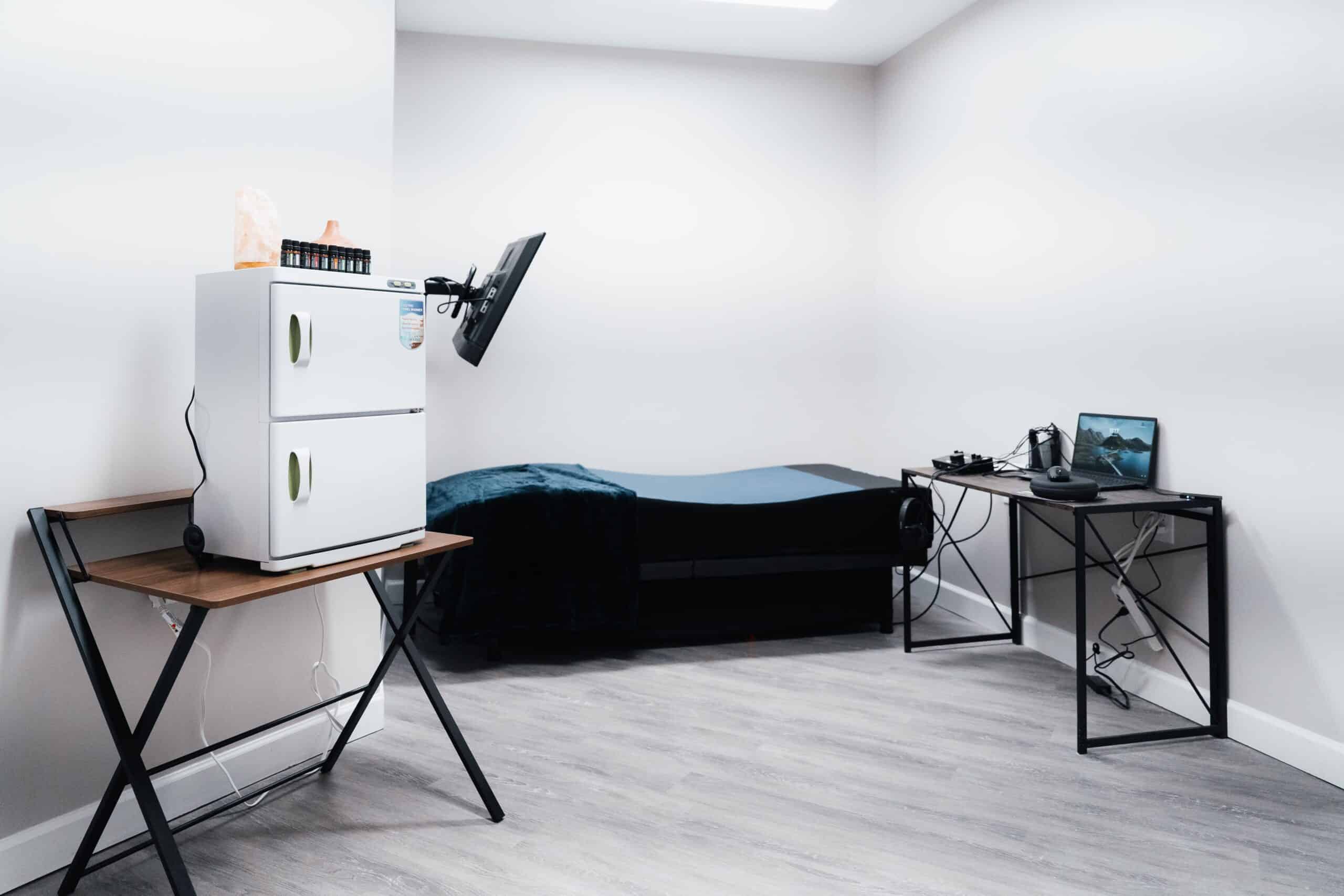
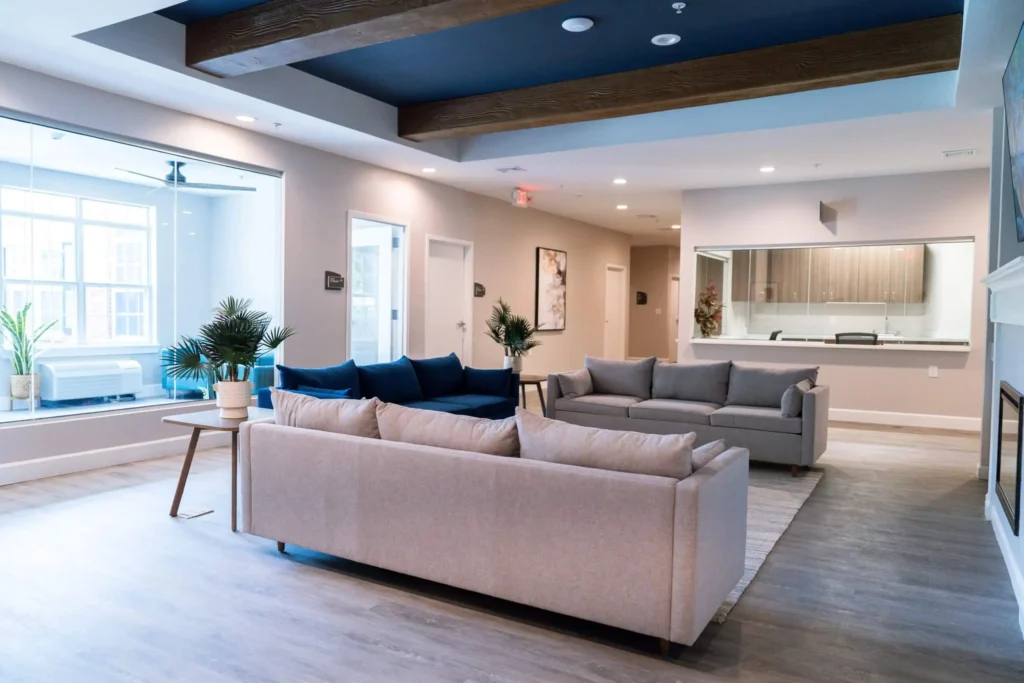
Residential treatment begins where the hospital’s job ends. An adult lives at a treatment center for a stretch of weeks, with a structured daily schedule of therapy, psychiatric care, and skills practice. The setting is a home rather than a ward. The person chose to be there, keeps their belongings, sleeps in a bedroom, and can leave.
The purpose is different too. A hospital stay is about whether someone is safe today. Residential treatment looks at why the crises keep happening and what would help stop them, and that takes weeks. The work includes finding a medication approach that keeps working over time, treating the trauma itself, and practicing new responses to the specific situations that keep pushing someone toward crisis.
Residential care requires a baseline of stability. A person needs to be medically stable, able to take part in therapy, and able to keep themselves safe in an unlocked setting with staff support. Someone who has passed through the worst of a crisis usually meets that bar. Someone in the middle of it usually does not, yet.
Side by Side, Point by Point
The clearest way to see the difference is to set the two levels against each other on the questions families ask most.
- Purpose: The hospital stabilizes acute danger. Residential treats the underlying condition so the danger becomes less likely to return.
- The door: Hospital units are usually locked, and some patients are there involuntarily. Residential is voluntary and unlocked.
- Length: Hospital stays are usually days. Residential is commonly several weeks, set by clinical progress and insurance review.
- A typical day: On a hospital unit, observation, medication, brief groups, and a lot of waiting. In residential care, a full schedule of individual and group therapy, psychiatric visits, and structured activities.
- Medication: The hospital moves quickly to control acute symptoms. Residential has time to watch a medication across weeks and adjust carefully.
- Family: Hospital visiting is often limited to set hours. Residential programs usually build family sessions into the treatment itself.
- What comes after: Hospital discharge points toward a step-down level. Residential discharge points toward outpatient care with a plan already tested.
Between those two levels sit a few shorter-term options worth knowing. Tennessee’s public crisis system includes walk-in centers that offer evaluation with up to 23 hours of observation, and crisis stabilization units for adults who are willing to receive services, where the state reports an average stay of three days. Those units are reached by referral from mobile crisis teams or walk-in centers, and the first door into all of it is a call or text to 988.
How People Move Between the Two Levels
A common pattern looks like this. Someone reaches a breaking point, ends up in an emergency department, and is admitted to a psychiatric unit. Five days later the acute danger has eased, the new medication has taken the sharpest edge off, and the unit discharges them home with a follow-up appointment two or three weeks out. Within a month the same conditions that produced the crisis are back in place, and so is the crisis.
Clinicians call that cycle the revolving door, and it is one of the clearest signals that a step between hospital and home is missing. Residential care is often the step that breaks the cycle, because it keeps the structure and support of an inpatient setting while shifting the work from stabilization to treatment. For some people, the right step down is a partial hospitalization program, which runs most of the day while the person sleeps at home, or an intensive outpatient program a few hours several days a week. Both sit on the outpatient side of the line between inpatient and outpatient mental health care, which makes them a good fit once home is stable enough to sleep in.
The sequence also runs the other way. A person in residential treatment occasionally needs a short hospital stay if symptoms escalate past what an unlocked setting can safely hold. When that happens, the hospital handles the spike, and the residential work picks up again once it passes.
Questions That Point to One or the Other
No checklist replaces a clinical assessment, but a few questions sort most situations quickly.
Signs the Hospital Comes First
- Immediate danger: A suicide attempt, a specific plan with access to means, or threats of violence toward others.
- Loss of contact with reality: Psychosis, meaning hallucinations or fixed false beliefs, or severe mania, a state of racing energy and impaired judgment that can lead to dangerous decisions.
- Inability to meet basic needs: Not eating or drinking, not sleeping for days, or being unable to stay physically safe.
- Medical instability: Dangerous withdrawal, an overdose, or a physical condition that needs hospital-level monitoring.
Signs Residential May Be the Right Level
- Persistent but not imminent risk: Ongoing suicidal thoughts without an active plan, where weekly therapy is not enough to keep things steady. Treatment for suicidal ideation is its own clinical focus at this level.
- The revolving door: One or more recent hospitalizations, each followed by a return to crisis within weeks.
- Treatment that has stopped working: Several medication trials and a course of therapy with no lasting change, which is the territory of treatment-resistant depression and similar conditions.
- Daily life has come apart: Work, sleep, meals, and relationships have become unreliable in a sustained way rather than during one hard week.
- More than one condition at once: A mood or trauma disorder alongside substance use, which calls for dual diagnosis treatment that addresses both together.
For adults who have never been hospitalized, the signs of when residential treatment becomes necessary start somewhere else, with how outpatient care has been going.
Where Arbor Wellness Fits
Arbor Wellness is a residential treatment center for adults, located at 200 Winners Circle South in Brentwood, a few minutes off I-65 between Cool Springs and Nashville. It is not a hospital, an emergency service, or a crisis unit, and it does not hold anyone involuntarily. Its clinical focus is high-acuity adult mental health: complex trauma, treatment-resistant depression, bipolar disorder, and severe anxiety, often in people who have already been through a hospital stay or two.
The weeks here are built around therapy rather than observation. Dialectical behavior therapy teaches concrete skills for the moments when emotion overrides judgment, which is often what sent someone to the hospital in the first place. Cognitive behavioral therapy works on the thinking patterns that keep a depression in place. Somatic therapy addresses how trauma lives in the body. A master’s-level therapist meets with each person individually every week, and psychiatric care includes genetic testing that helps narrow which medications a person’s body is likely to process well, which matters after a hospital has started three new prescriptions in four days.
The setting is part of the treatment. A private chef, a spa with a sauna and cold plunge, a sensory room, and trauma-informed yoga sit alongside two less common tools, Alpha-Stim, a handheld device that sends a mild current through ear clips to ease anxiety, and biosound therapy, which pairs music with vibration to settle an overloaded nervous system. For someone whose last experience of care was a hospital unit, being treated as an adult changes how fully they take part.
Families stay involved. Residents have scheduled phone time three times a week, with FaceTime available, and family therapy is part of the clinical program. Relatives flying in land at Nashville International, about 25 minutes from the property.
What Coverage Usually Looks Like
Insurers treat these as separate levels of care, and each is reviewed for medical necessity on its own terms. A plan that approved a hospital stay will want fresh clinical information before approving residential treatment, and the reverse is also true. Federal parity rules generally require plans that cover mental health care to cover it on terms comparable to medical care, but the authorization process still applies.
Arbor Wellness is in-network with Aetna, including its Meritain, Banner Health, Coventry Health Care, First Health Group, Innovation Health, and Sutter Health networks; with Cigna, including Cigna Allegiance; and with Blue Cross Blue Shield of Alabama, where the contract covers residential treatment. TRICARE is in-network for patients 21 and under only. A hospital discharge summary is useful paperwork to have on hand, since it often documents exactly why a step-down level is needed.
Talk Through the Right Level of Care With Arbor
If someone has just come home from a psychiatric unit, or seems headed toward one, the most useful next step is a clinical conversation about which level fits now. A call with Arbor’s admissions team covers what happened, what has been tried, and whether residential care is the right step, whether a hospital or crisis unit needs to come first, or whether a day program closer to home would serve better. Parents, partners, and adult children often make the first call, and that is a normal way to begin. Reach our admissions team now to go over benefits and what an arrival day looks like. If anyone is in danger tonight, call 911 or call or text 988 first.
Insurance Can Help Cover the Cost of Treatment
We work with most major health insurance plans—including those with out-of-network benefits—to help make detox and recovery more affordable.
Click below to verify your coverage and explore your options today.






Meet the Experts Behind Your Care
At Arbor Wellness, every team member is dedicated to your recovery, from our clinicians to our support staff. Our experts combine proven treatments with compassionate care to support healing in mind, body, and spirit.

Amanda Johnson

Makayla George, LCSW

Ainsley Cousin
Real Quotes From clients who found healing
Faqs About Residential vs Psychiatric Hospitalization
No. A psychiatric hospital unit is built for acute crisis. It is usually locked, can include people held involuntarily, and stays are measured in days. Residential treatment is voluntary and unlocked, stays are measured in weeks, and the day is organized around therapy and psychiatric care rather than observation. Adults in residential care keep their belongings, sleep in a bedroom, and can leave. If someone is in immediate danger, the hospital or 988 comes first, and residential can follow once that danger has passed.
Yes, and it is one of the most common routes into residential care. A short hospital stay handles the acute danger; residential care then treats the condition underneath it so the person does not cycle back. The hospital’s discharge planner can help coordinate, and the discharge summary is useful for insurance review. Ask the residential program to speak with the hospital team before discharge if possible, so there is no gap of days or weeks at home in between.
Many plans cover both, but each is approved separately for medical necessity, so approval for a hospital stay does not carry over automatically. Arbor Wellness is in-network with Aetna and its affiliated networks, with Cigna including Cigna Allegiance, and with Blue Cross Blue Shield of Alabama, where the contract includes residential treatment. TRICARE applies to patients 21 and under only. The admissions team verifies the specific policy and what it requires before anyone is admitted.
Start with danger. A suicide attempt, a specific plan, threats toward others, psychosis, severe mania, or being unable to eat, sleep, or stay physically safe all point to the hospital first. Ongoing struggles without immediate danger, repeated hospital stays that do not hold, or treatment that has stopped working point toward residential care. A clinician can sort it out in one conversation. If you are unsure tonight, call or text 988, which can connect you to local crisis services.
Sources
- American Society of Addiction Medicine. (n.d.). The ASAM criteria. https://www.asam.org/asam-criteria
- Tennessee Department of Mental Health and Substance Abuse Services. (n.d.). Crisis services continuum. https://www.tn.gov/behavioral-health/crisis/continuum.html
- 988 Suicide & Crisis Lifeline. (n.d.). What to expect when you call. https://988lifeline.org/get-help/what-to-expect/
- National Institute of Mental Health. (n.d.). Warning signs of suicide. https://www.nimh.nih.gov/health/publications/warning-signs-of-suicide
- Substance Abuse and Mental Health Services Administration. (n.d.). Co-occurring disorders. https://www.samhsa.gov/substance-use/treatment/co-occurring-disorders
- Healthcare.gov. (n.d.). Mental health and substance abuse coverage. https://www.healthcare.gov/coverage/mental-health-substance-abuse-coverage/
Overview
- Psychiatric hospitalization: A hospital unit for acute crisis. Often locked, sometimes involuntary, usually measured in days. Its job is safety and stabilization.
- Residential treatment: Voluntary, unlocked, live-in care measured in weeks. Its job is treating the condition underneath the crisis.
- The deciding question: Is someone in immediate danger, or unable to stay safe even with support? If yes, the hospital comes first. If no, residential may fit.
- They often work in sequence: Many adults go from a short hospital stay into residential care rather than straight home.
- Emergency right now: Call 911, or call or text 988. Neither a hospital comparison nor a residential program is the first step in a crisis.